How to Track Supplier Deliveries Automatically Singapore F&B
Learn how to track supplier deliveries automatically in Singapore F&B: scan invoices, match POs, update inventory with AI OCR. Cut errors, save hours on stock counts vs manual methods like Eats365 or Qashier.
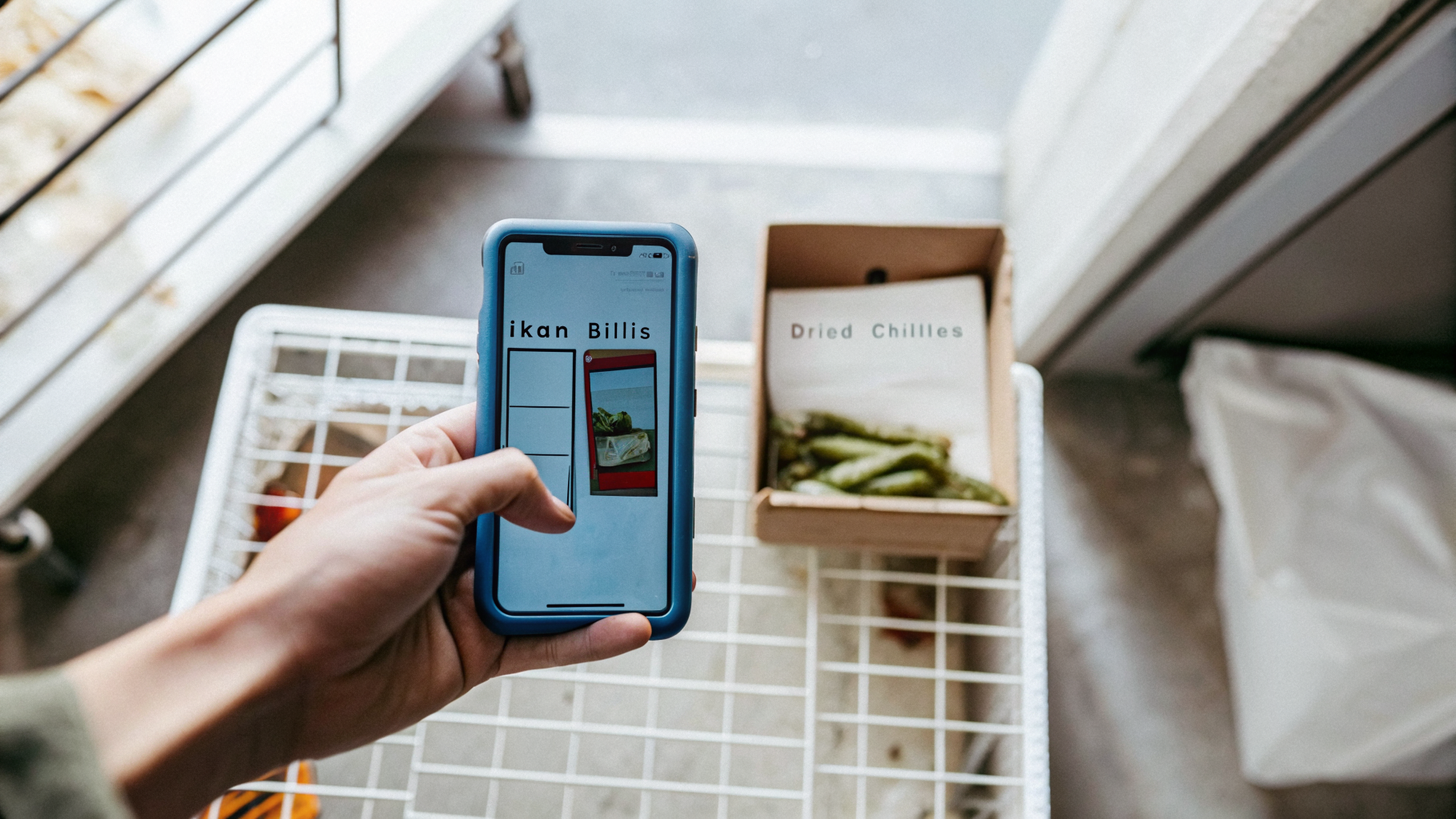
A bubble tea kiosk at Jurong Point just received 50kg of tapioca pearls from Malaysia. The owner snaps a photo of the delivery note on his phone. Within 30 seconds, inventory updates, costs post at the exact invoice price, and a variance report flags if the quantity matches the PO. No spreadsheet, no double-entry.
That's automatic supplier delivery tracking in action. For Singapore F&B operators—hawker stalls in wet markets, zi char spots in Yishun HDB estates, cafes in CBD shophouses—manual logging eats 2-4 hours weekly. Suppliers dump boxes of ikan bilis, chicken thighs, or evaporated milk; you tally by hand, pray the weights match your WhatsApp order, then key into Excel or a basic POS. Errors creep in: 5% overage here, short delivery there. Food cost balloons from 32% target to 38%, margins vanish.[1][3]
Digital tools fix this. They scan delivery notes or invoices on-site, extract line items via AI, match against your purchase order, and post to inventory at weighted-average cost. SFA requires accurate stock records for food safety traceability—think listeria outbreaks traced back to bad prawns.[2] IRAS demands GST-accurate invoice booking for input claims.[1] Automation handles both, plus flags discrepancies before they hit your COGS report.
Why Manual Tracking Fails in Singapore F&B
Your typical flow: Supplier texts "20kg chicken arrived, $12/kg." You count boxes in the 38°C kitchen humidity, note weights on a crumpled paper, later enter into Loyverse or Square. But Loyverse needs manual stock adds per item; Square lacks recipe costing tie-ins. Result: yesterday's delivery confuses with today's, expiry dates get forgotten, over-usage hides theft or portion creep.[3]
Market data: 68% of SG F&B ops still rely on spreadsheets for inventory, per a 2025 Enterprise Singapore survey—despite Productivity Solutions Grant (PSG) covering 50% of digital tools up to $30k.[2] Competitors like Qashier excel at PayNow QR but manual stock entry; Eats365 does table maps well, inventory via clunky CSV uploads. Antelope shines in AI invoice capture for chains, starting ~$99/mo, but it's procurement-first, not POS-integrated.[3]
Real cost: A Tanjong Pagar ramen shop overpaid $450 last quarter on untracked short deliveries—3kg missing ngoh hiang per invoice, unnoticed till month-end COGS spiked.[1]
Invoco tip: Photograph the supplier's delivery note before unpacking—AI OCR grabs quantities even if handwritten.
Step-by-Step: Automate Delivery Tracking with AI OCR
 Invoco inventory management page tracking ingredients and stock levels
Pick a tool with on-site scanning (iPad/phone), PO matching, and auto-posting. Here's the workflow using proven SG systems like Antelope or Invoco.[3]
1. Set Up Suppliers & POs Digitally. In your POS/inventory app, add suppliers (e.g., "FairPrice Wholesale, Bedok" with GST reg no). Create POs via chat-to-order (Tinvio-style) or manual: 10kg prawns @ $18/kg, expected 15 May. App generates QR or ref no for supplier confirmation.[1]
2. Receive On-Site with Mobile Scan. Delivery van pulls up at your Neil Road kopitiam. Grab iPad or phone app (Antelope's iPad tool extracts PO#, supplier, amounts instantly).[3] Snap invoice/photo. AI (Gemini-powered in some) highlights line items: bounding boxes around "20kg rice $2.20/kg GST 9%". Accuracy 95%+ on SG formats.[1][3]
3. Match & Approve Variance. App cross-checks vs PO: rice +2kg over? Flag yellow. Prawns -0.5kg? Red alert, prompt note "partial reject". Approve with thumbprint/PIN. Stock posts at invoice price, not PO estimate—weighted average updates recipes (e.g., laksa bowl cost rises 8¢).[2]
4. Auto-Book & Report. Approved invoice pushes to Xero as ACCPAY bill, GST auto-matches IRAS rates.[1] COGS report computes "beginning + purchased - ending = food cost %". Over tapioca? Drill to inventory management for perishable items Singapore F&B guide. Shrinkage >5%? Check staff usage.
5. Alert & Reorder. Low stock triggers PayNow PO to supplier. Multi-outlet? Row-level security keeps Jurong kiosk data from HQ.
Troubleshooting: Blurry photo? Retake—AI rejects <80% confidence. Non-English supplier (Thai basil)? Train with 3 samples. Integration lag? Edge functions sync realtime.[3]
Tinvio does chat-to-order free, tracks deliveries, auto-invoices—but no POS tie-in. Multiable ERP auto-reorders with expiry, suits chains $200+/mo. For stalls, FoodZaps bundles inventory but manual scans.[1][2]
How Invoco Handles Supplier Delivery Automation
You're a zi char stall at Boon Lay wet market, deliveries thrice weekly: live fish, tau pok, sambal belacan. Manual tally takes 45min per drop, errors push food cost to 36%. Invoco's AI invoice OCR solves it: upload supplier PDF/photo in the tablet app, Gemini extracts line items (e.g., "15kg tilapia $6.80/kg, GST $9.27") with visual highlights. One-tap approve posts stock at invoice price to inventory + recipe costing module—auto-recomputes laksa cost if fish up 10%. COGS + ingredient variance flags over-usage (e.g., belacan 12% high). Xero pushes bills seamlessly. Outcome: 2hr/week saved, food cost locked at 32%, IRAS-ready. Try Invoco.
Claim PSG Grant: 50% Off Automation Tools
IMDA's PSG covers POS/inventory up to $30k spend—e.g., $49/mo Invoco single-outlet drops to $24.50.[2] Steps: PSG Grant for POS System Singapore: Step-by-Step Application Guide. Assess needs on GoBusiness, pre-approved vendors list includes POS like Qashier. Apply pre-purchase, claim post-setup. 2026 cap: $30k per solution.[2]
SFA mandates delivery checks for perishables—auto-tools log batch/lot nos for traceability, avoiding $10k fines.[3]
Competitors: Fair Comparison
| Tool | Delivery Tracking | Pricing (SGD/mo) | Best For | Weakness |
|---|---|---|---|---|
| Antelope | AI scan + PO match | ~$99+ | Chains, ERP sync | Procurement-heavy, no POS[3] |
| Tinvio | Chat-order + track | Free basic | Stalls, WhatsApp fans | No inventory costing[1] |
| Qashier | Manual stock add | $69+ | PayNow QR | No OCR[2] |
| Eats365 | CSV upload | $50+ | Tables | Slow stock[2] |
| Invoco | OCR + variance | $49 | SG F&B all-sizes | Built for IRAS/SFA[1] |
Verdict: For auto-tracking under $100/mo, OCR wins over manual. Pair with POS with inventory alerts Singapore: Stop Stockouts 2026 for low-stock texts.
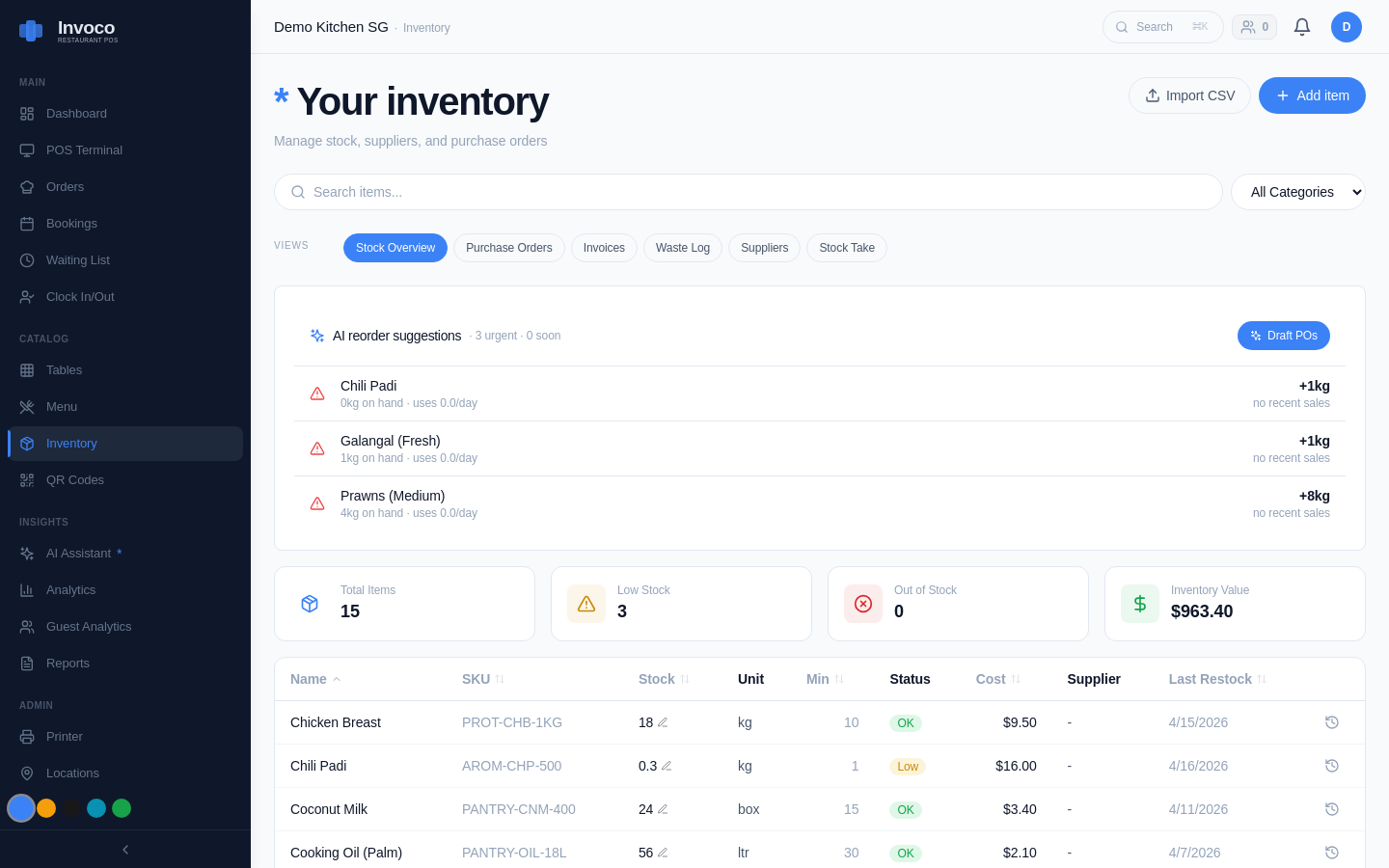 Invoco inventory management interface displaying suppliers table, purchase orders tab, and stock levels relevant to automated delivery tracking
FAQ
Does SFA require digital delivery logs? No, but paper trails must trace contaminants within 24hr—automation proves compliance faster.[3]
What if supplier invoice is handwritten? Top OCRs like Gemini handle 90%+, flag rest for manual.[1]
Free trial? Most offer 14-30 days; test 3 deliveries first.
Sources
 Invoco orders page with active and completed tickets
- How Singapore-based Tinvio is automating multiple aspects of ...
- The Power of a Good F&B POS System in Singapore - FoodZaps
- F&B | Antelope Singapore
- Top Food Delivery Platform in Singapore for 2026 | Swift Tech Co.
- Best ERP & HRMS for Food & Beverage, F&B, Catering Industry
- Getz: All-in-one F&B Restaurant Management Solutions | All-in-one ...
- Logistics Solutions for the Food & Beverage Industry - TransTRACK
- Centralize Delivery Orders in One Place | APPZPOS Order Hub
- Automation food industry | KUKA Singapore