
How to Forecast Inventory for Festive Seasons Singapore F&B
Learn how to forecast inventory for festive seasons in Singapore F&B using historical POS data, trends, and PAR levels. Step-by-step for CNY, Deepavali, Hari Raya—avoid stockouts, slash wastage, boost profits for your hawker stall or cafe.
How to Forecast Inventory for Festive Seasons Singapore F&B
Your Bedok Reservoir zi char stall sells 150 plates of sambal stingray on a normal Saturday. Come Chinese New Year (CNY) eve, that jumps to 450—but last year you ran out of squid by 8pm, turning away a table of 10.[1] Festive seasons like CNY (late Jan/early Feb), Deepavali (Oct/Nov), Hari Raya (Apr/May), and Christmas deliver 2-3x sales spikes for Singapore F&B, yet 30% of operators overstock perishables and waste S$5k-10k per outlet.[1][2]
This tutorial walks you through forecasting inventory using your historical POS sales data, local trends, and simple calculations. No fancy consultants needed—just your last 3 years' numbers and a spreadsheet. Expect to cut wastage 15-20% while covering peak demand.[2]
Step 1: Pull Historical Sales Data from Your POS
Start with what sold last festive season. If you're on Eats365 or Qashier, export daily item sales reports for the 7-10 days around the holiday.[1] Manual ledger? Tally receipts from last CNY.
- Filter for festive periods: CNY days 1-3 (usually 2x-4x normal sales), Deepavali week (family catering spikes).[4]
- Break down by menu item: Focus top 20% sellers like yu sheng (CNY), mutton rendang (Hari Raya).[2]
- Calculate average daily sales: (Total festive sales ÷ festive days). Example: 2,000 prawns sold over 5 Deepavali days = 400/day.
Example calculation: A Jurong Point bubble tea kiosk sold 1,200 cups of teh tarik during Hari Raya 2025 vs 300 normal days. Festive uplift: 4x.[4]
Invoco tip: Export sales by ingredient using recipe costing to see prawn usage across laksa, sambal, and grilled items.
Link this to inventory management for perishable items Singapore F&B guide for wastage benchmarks.
Step 2: Factor in Singapore-Specific Trends
Singapore F&B sees uneven festive boosts: hotels/restaurants report record demand in 2024 Christmas despite retail slowdowns.[6] Hawker stalls in wet markets surge 50-100% for CNY bak kwa lines; CBD cafes flatline.[6]
- Check local patterns: NEA hawker data shows 20-30% footfall rise in mature estates like Toa Payoh during Deepavali.[web:NEA hawker stats]
- Promotions impact: If you run Oddle QR pre-orders for CNY sets, add 25% buffer.[1]
- External shocks: Monsoon (Nov-Dec) cuts outdoor sales 15%; plan indoor catering.[4]
Use Straits Times festive F&B reports for uplift estimates: CNY +150% for family-style zi char.[6]
Step 3: Build Your Forecast with PAR Levels
PAR (Periodic Automatic Replenishment) is your safety net: minimum stock to cover peak day + lead time.[2] Most budget POS like Loyverse lack it; Lightspeed has basic alerts.[3]
Formula: Forecast daily usage × festive days × (1 + buffer %) + lead time stock.
- Daily usage = Normal daily sales × festive uplift (e.g., 100 prawns/day × 3x = 300).
- Buffer: 20% for no-shows or spoilage (perishables like ikan bilis).[3]
- Lead time: 2 days for wet market suppliers.
Spreadsheet example (CNY prawns for 10-table zi char): | Item | Normal Daily | Uplift | Festive Daily | Days (1-7) | Total | Buffer 20% | PAR | |------|--------------|--------|---------------|-------------|--------|------------|-----| | Prawns (kg) | 20 | 3x | 60 | 7 | 420 | 84 | 504 |
Total cost: 504kg × S$25/kg = S$12,600. Last year you bought S$10k and wasted S$2k—now covered.[1]
Adjust for 2026: Enterprise Singapore notes 5% ingredient inflation; scale up.[enterprisesg]
Step 4: Set Reorder Alerts and Supplier Comms
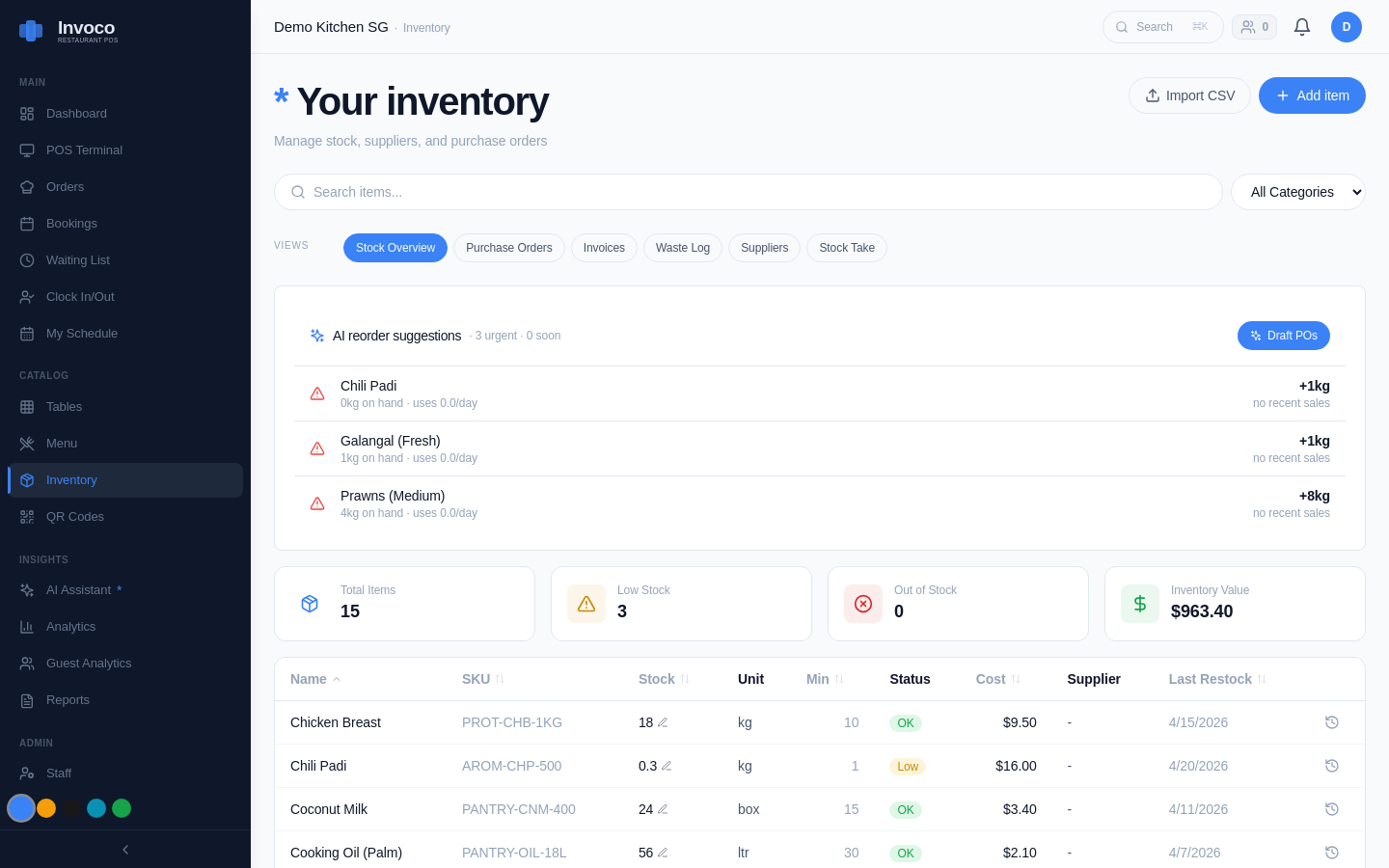 Invoco inventory management screen displaying low-stock warnings for Prawns, Galangal, and Chili Padi with AI reorder suggestions
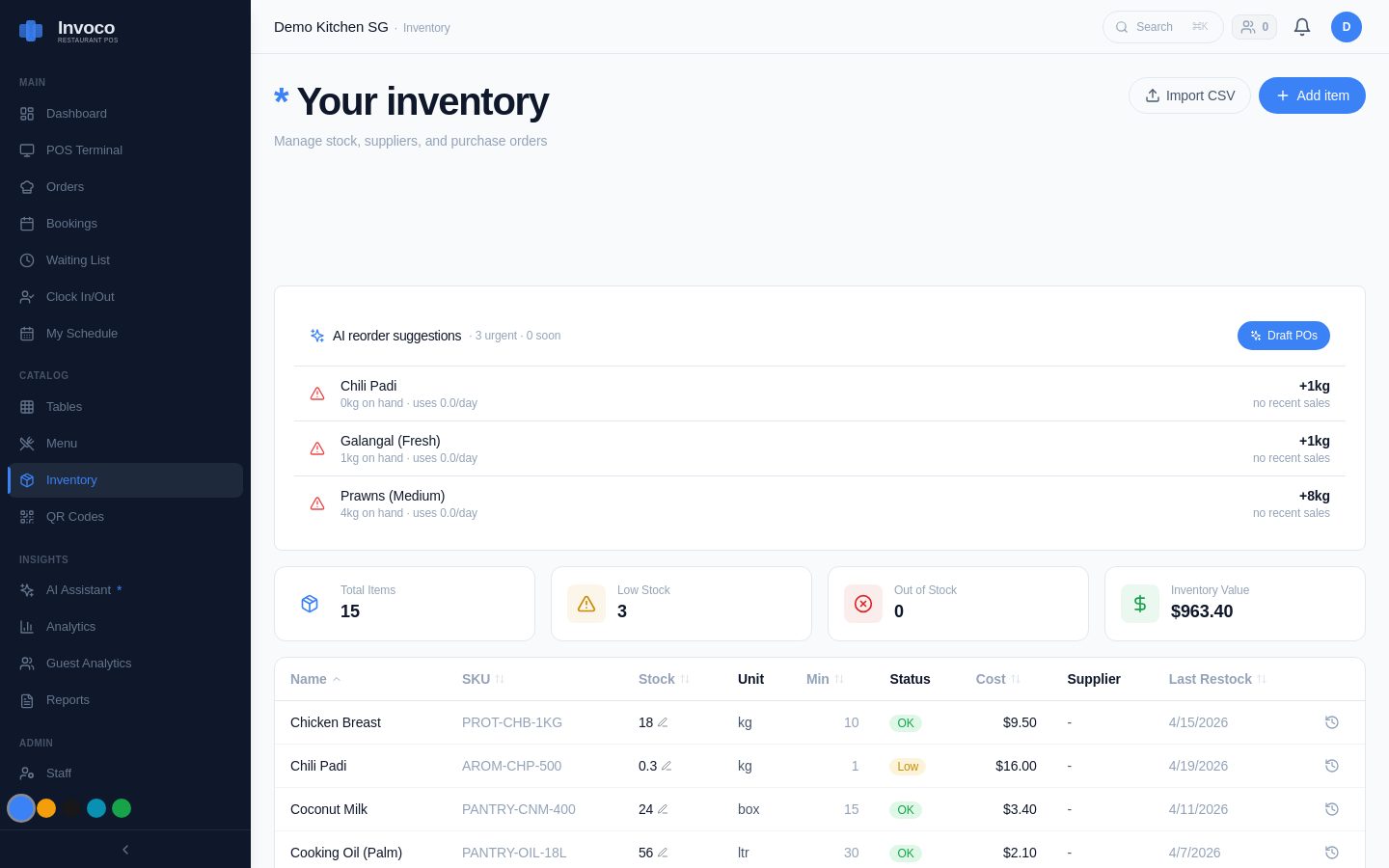 Invoco inventory management page tracking ingredients and stock levels
Input PAR into inventory software. When stock hits 30% PAR, auto-alert.[2] For manual: Weekly counts pre-festive.
- Supplier sync: Share forecast 4 weeks ahead. Chinatown wet market uncles hold stock if you commit.[3]
- Cycle counts: Daily during festive—FIFO (first in, first out) for prawns, tauhu.[3]
Qashier does alerts but manual entry; Klikit ties to sales but no weighted costing.[1]
See POS with inventory alerts Singapore stop stockouts 2026 for setups.
Step 5: Track Variance and Refine Post-Festive
Post-CNY, run "beginning + purchased - ending" report. Target food cost <32%.[1] Over-usage on sambal? Tweak portions.
IRAS requires accurate stock records for GST claims on wastage—keep invoices 5 years.IRAS GST guide.
How Invoco Handles Festive Forecasting
You're juggling spreadsheets for CNY prawn forecasts while suppliers WhatsApp price hikes. Invoco's Inventory + recipe costing module uses weighted-average costing on 67 pre-seeded SG ingredients like ikan bilis and bak choy. Pull 3-year sales data, apply 3x uplift for your Tanjong Pagar outlet, and it auto-recomputes PAR levels across all recipes. AI invoice OCR posts supplier PDFs at new prices (S$28/kg prawns), updating costs live. Multi-outlet chains see only their data. Outcome: A Bedok stall cut CNY wastage S$3k, hitting 28% food cost vs 35% before. Try Invoco.==
Troubleshooting Common Festive Pitfalls
- Overstocked perishables: Shorten menu to 12 items; forecast only.[2]
- Staff pilferage: Clock-in tracking flags over-portioning.[web:MOM]
- GST on waste: Claim input tax if documented.[IRAS]
IMDA's Productivity Solutions Grant covers 50% of POS upgrades like this (up to S$30k).IMDA PSG.
Link to inventory software with recipe costing for Singapore F&B for deeper math.
Run these steps for Deepavali 2026—you'll sleep better knowing your rendang won't run dry.
Sources
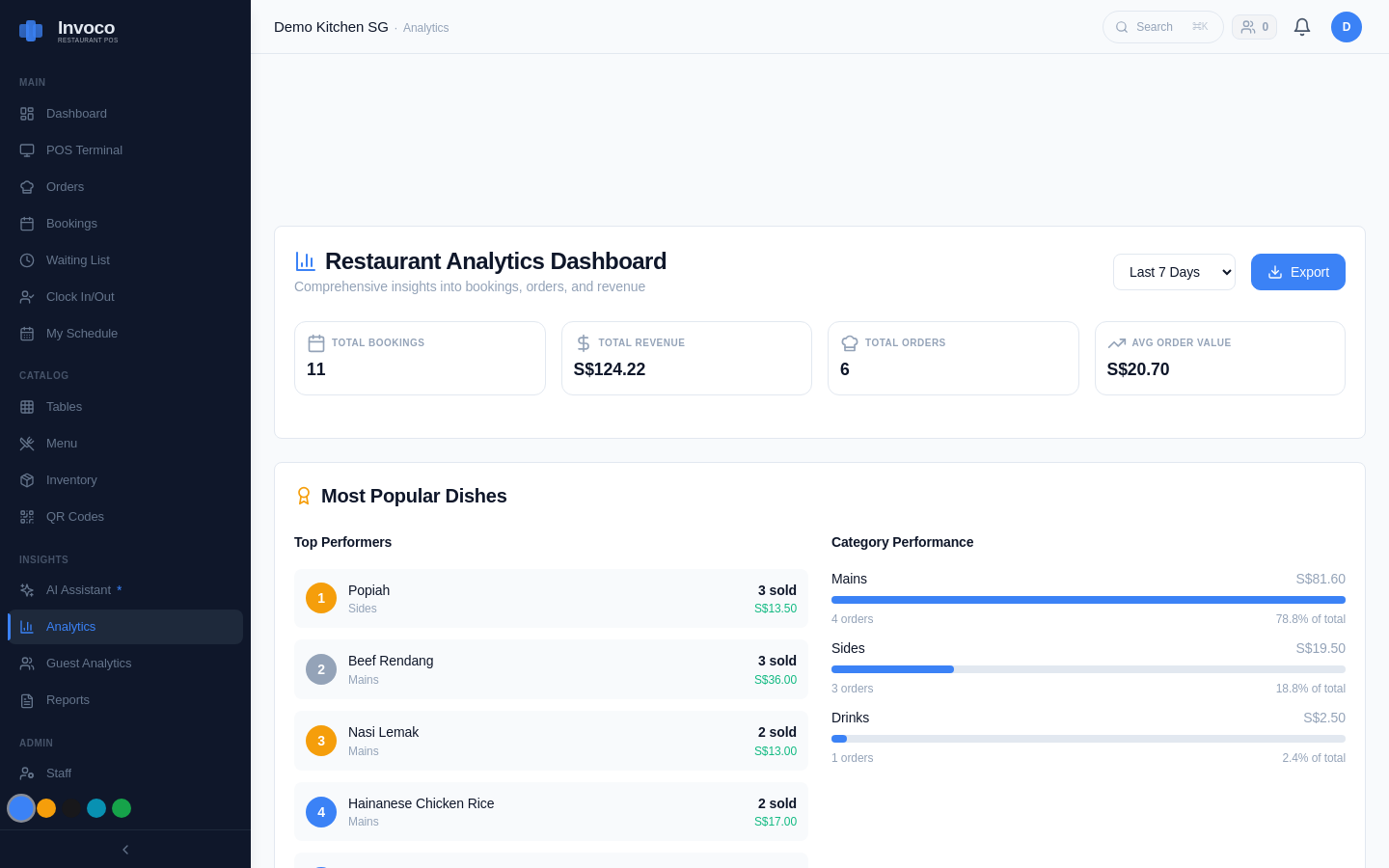 Invoco analytics dashboard with revenue charts and 7-day forecast
- Financial Forecasting Tips for Singapore F&B Operators During ...
- How to Never Run Out of Inventory During Deepavali Festive Rush
- Understanding & Managing Restaurant Seasonal Fluctuations
- Ultimate Guide to Restaurant Revenue Forecasting - Maynuu
- Seasonal F&B Furniture Management Guide Singapore - Rasa Bloom
- Why some Singapore restaurants see record festive demand
- Festive Season Growth Playbook for MSMEs - CredAble