Inventory Software with Recipe Costing for Singapore F&B
Inventory software with recipe costing for Singapore F&B. Auto-update menu costs, track food waste, control COGS. Built for hawkers, cafes, small restaurants.
TL;DR: Recipe costing software automatically recalculates your dish costs when ingredient prices change, so you're never selling at a loss. For Singapore F&B operators, this means real-time visibility into food cost percentage, variance alerts when ingredients are over-used, and the data IRAS expects during GST audits—all without manual spreadsheet updates.
Why Recipe Costing Matters for Your Margins
!Invoco menu management page with categorised items and prices Invoco menu management page with categorised items and prices
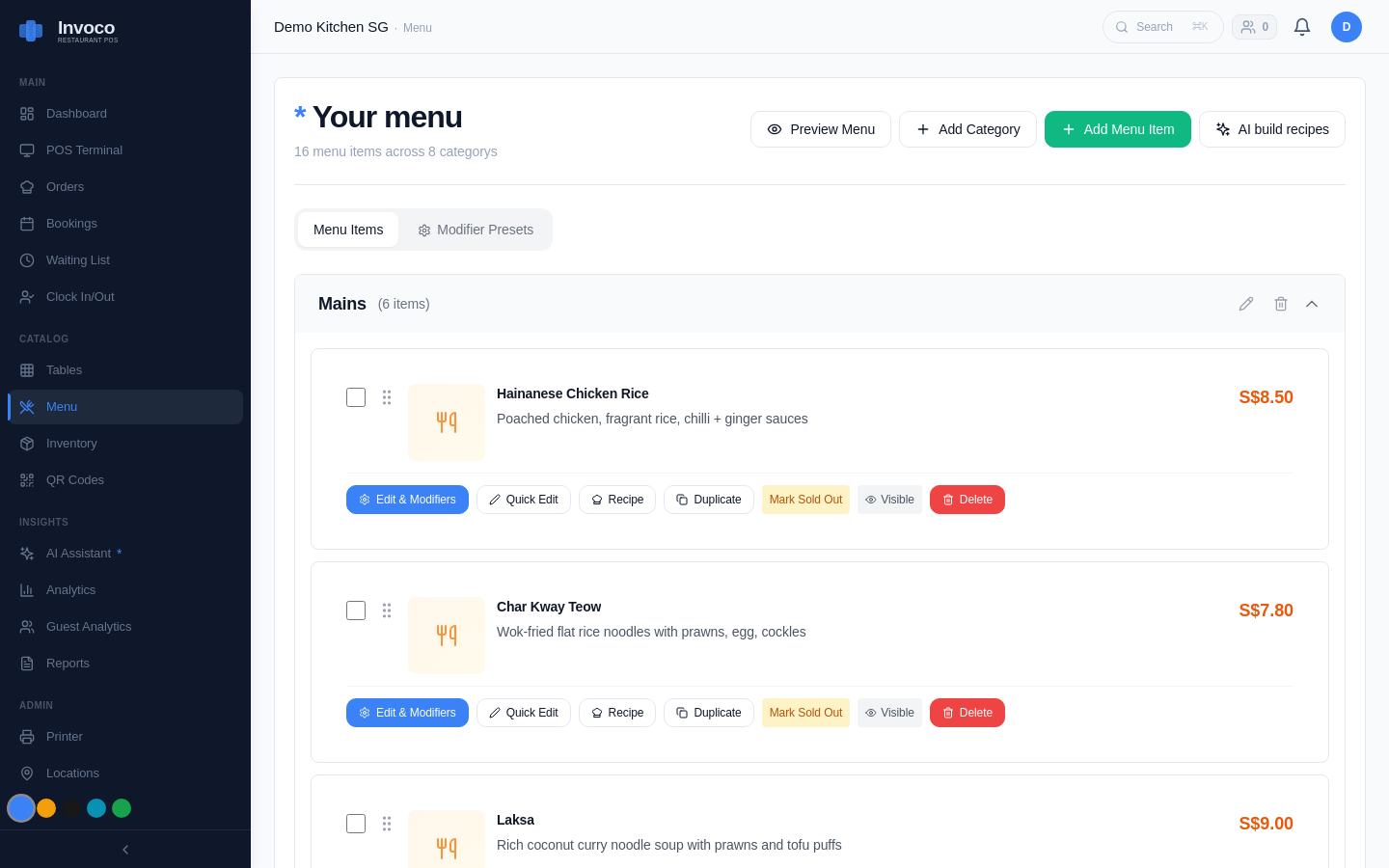
You know the squeeze: supplier prices jump, your menu costs shift, but you're still selling last month's prices. [A recipe costing card helps to cut down your daily costs associated with recipe costing][5] by forcing you to track exact ingredients, quantities, and even garnish costs per dish. Without it, you're flying blind on profitability.
Most Singapore operators still use spreadsheets. You manually enter ingredient costs, recalculate each dish by hand, and hope nothing changes mid-month. When your supplier raises chicken breast by 20%, you don't know your laksa margin has dropped until the month closes. By then, you've sold dozens of bowls at a loss.
Inventory software with built-in recipe costing solves this by connecting your invoices to your recipes. When you upload a supplier invoice, the system extracts ingredient prices, updates your recipe costs automatically, and flags which menu items are now below target margin.
Invoco tip: Weighted-average costing (not FIFO or LIFO) is the fastest way to reflect real ingredient costs in a high-turnover kitchen—your system should default to this.
How Recipe Costing Software Works
The Core Workflow
1. Upload recipes — You enter (or import) your recipes once: laksa broth, chicken rice, teh tarik. Include exact ingredient quantities, yields, and prep loss. [meez uses AI to capture recipes with built-in yields and unit conversions][4], so you don't have to manually parse handwritten notes.
2. Connect invoices — Link your supplier PDFs or photos. The software extracts line items and prices. [meez automatically updates ingredient prices so your recipe costs are always current][4].
3. Auto-recalculate dish costs — The system multiplies ingredient quantity × current price for every recipe. If chicken costs rise, your chicken rice cost updates instantly. No spreadsheet re-entry.
4. Track variance — Compare theoretical food cost (what you should have used) vs. actual (what you did use). If your laksa broth is over-budget, the system flags it by ingredient.
Real-Time Cost Visibility
[Automatically calculate recipe costs by factoring in yields, prep loss, and unit conversions][4]. This matters because a 5% yield loss on prawns (shells, heads) changes your cost per plate. Most budget POS systems ignore this; recipe costing software doesn't.
[Cost breakdowns for both the total recipe and individual portions can be viewed and tracked][2]. You see: laksa broth costs S$2.40, chicken costs S$1.80, garnish S$0.30 = S$4.50 total. Selling at S$8.50? You have 47% food cost on that item. Below your 35% target? Time to adjust price or portion.
Singapore-Specific Compliance & Reporting
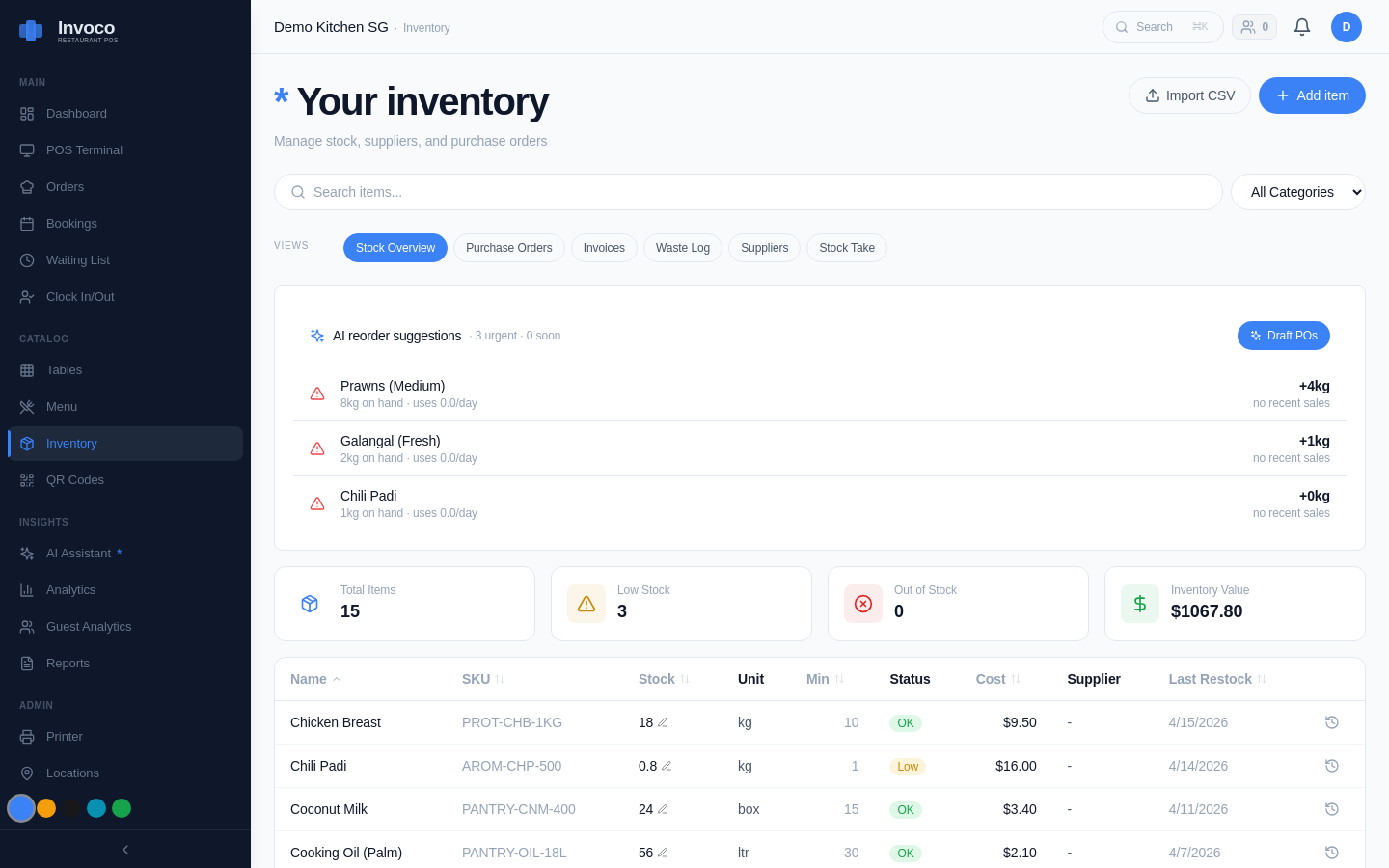
!Invoco inventory management page tracking ingredients and stock levels Invoco inventory management page tracking ingredients and stock levels
When IRAS audits your GST returns or MOM checks your payroll, they want to see your cost of goods sold (COGS) calculation. Recipe costing software gives you the audit trail:
- Ingredient variance reports — "Beginning inventory + Purchases − Ending inventory = COGS." The software calculates this automatically, flagging shrinkage or over-usage per ingredient.
- Supplier invoice records — Every price you used is tied to a dated invoice. IRAS can see you didn't just guess your chicken cost.
- Multi-location tracking — If you run 2–3 outlets, the system tracks COGS per location, so you know which unit is leaking margin.
[Inventory can be tracked and managed, with options for multiple par levels for different locations][2], so your Clementi stall and Tanjong Pagar stall each report separately.
Invoco: Automatic Cost Updates Without Manual Entry
!Invoco inventory management interface displaying ingredient stock levels, current costs per unit, low-stock warnings, and automated purchase order recommendations based on par leve Invoco inventory management interface displaying ingredient stock levels, current costs per unit, low-stock warnings, and automated purchase order recommendations based on par leve
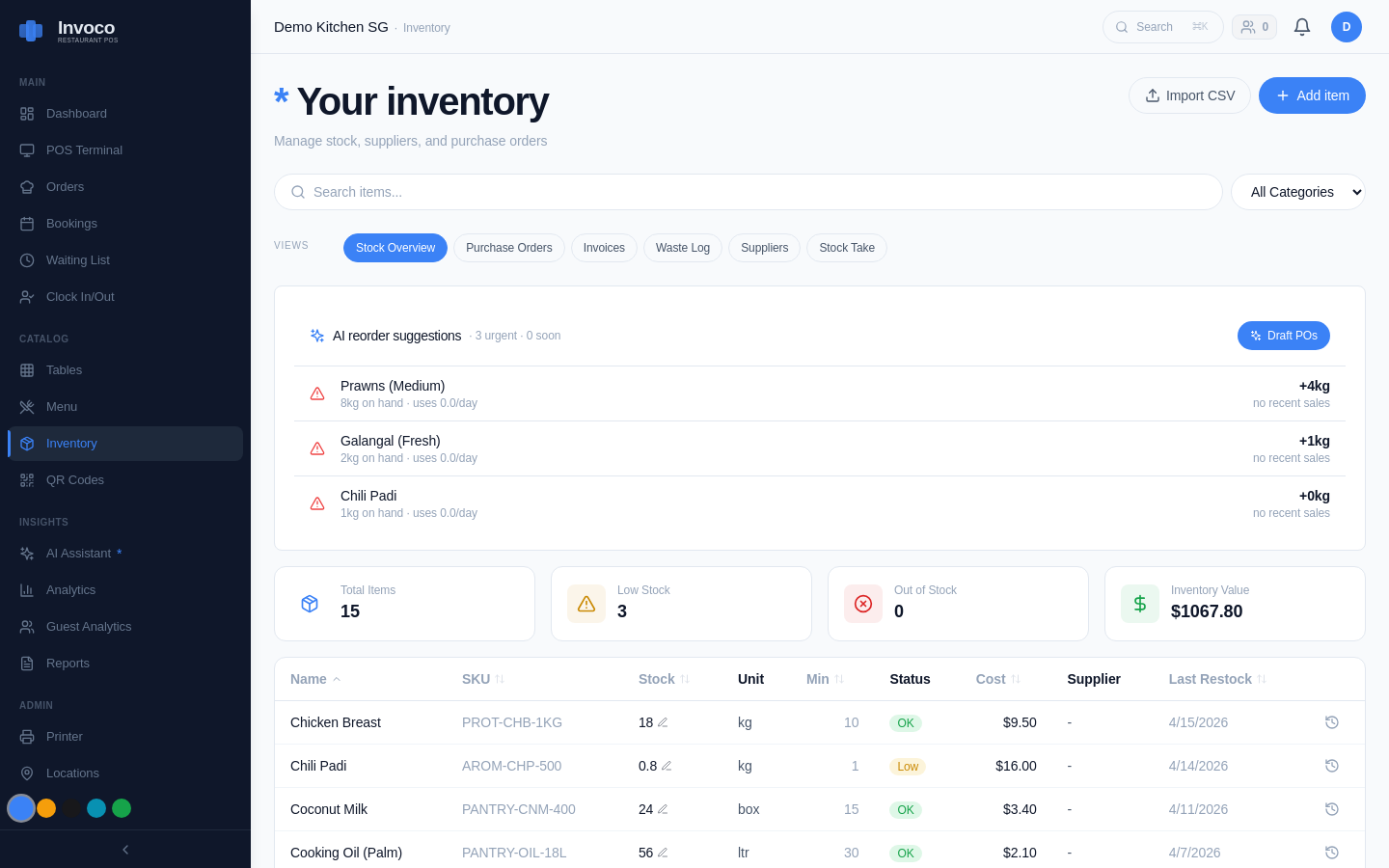
You're spending 2–3 hours a week re-entering supplier prices into spreadsheets, and your menu costs are always one invoice behind. Invoco's AI invoice OCR module uploads a supplier PDF or photo, extracts line items with bounding-box highlights, and on approval, automatically posts stock at the invoice price. Your recipes recalculate instantly. The COGS + ingredient variance report then shows you beginning + purchased − ending food cost %, flagged by ingredient, so you spot over-usage immediately. Invoco integrates with Xero, so approved invoices push as bills with the correct GST rate—no manual reconciliation. The outcome: you spend 15 minutes on invoicing instead of 2 hours, your menu costs are always current, and you have the variance data IRAS expects.
Comparing Recipe Costing Platforms
| Feature | meez | Recipe Costing | Craftable |
|---|---|---|---|
| Vendor invoice import | Yes, auto-updates | Yes | Yes |
| Recipe scaling | Yes | Yes | Yes |
| Allergen tracking | Yes | Yes | Yes |
| Variance reporting | Yes | Yes | Yes |
| Multi-location | Yes | Yes | Yes |
| Starting price | ~US$25/mo | US$25/mo per location | Custom |
| Singapore focus | No | No | No |
[meez is trusted by 35,000+ chefs][4] and focuses on recipe management + training. [Recipe Costing offers a 14-day free trial, no credit card required][2], and starts at US$25 per location per month. [Craftable connects purchasing, inventory, AP automation, and financial reporting in one place][8], trusted by 10,000+ operators including Kimpton and Hakkasan—but is built for larger chains.
For Singapore hawker stalls and small cafes, the sweet spot is a system that handles recipe costing and POS in one platform, so your sales data and inventory costs stay in sync.
FAQ
Q: How often should I update ingredient prices? A: Weekly if your suppliers change prices frequently (e.g., fresh produce). Monthly for stable items (e.g., oil, flour). The software should auto-update when you upload invoices, so you're never manually re-entering.
Q: What's the difference between recipe costing and inventory management? A: Recipe costing tells you the cost of a single dish (laksa = S$4.50). Inventory management tracks how much laksa broth you have on hand and when to reorder. You need both: costing tells you profitability, inventory tells you stock levels.
Q: Can recipe costing software integrate with my POS? A: Yes. [meez connects recipe data directly to your back office system, giving culinary and finance teams the same, accurate insights into costs, food waste, purchasing and menu performance][4]. Most modern POS systems (including Invoco, Square, Loyverse) support recipe costing integrations.
Q: Do I need to track prep loss? A: Yes. If you buy 1 kg of chicken breast and lose 10% to trimming, your actual cost per usable kg is higher. Recipe costing software lets you set yield % per ingredient, so the math is automatic.
Q: Is recipe costing software worth it for a single hawker stall? A: If you're selling 100+ portions a day and margins are tight (as they are in hawker F&B), yes. The software pays for itself in 1–2 months by catching one price increase you would have missed. For very small operations (20–30 portions/day), a spreadsheet may suffice, but software scales faster as you grow.
Sources
- Recipe Cost Calculator Pricing, Cost & Reviews - Capterra Singapore
- Recipe Costing Price, Reviews & Ratings | GetApp Singapore 2026
- Best Process ERP for Food & Beverage Industry in Singapore
- meez — Recipe Management & Food Costing Software
- 6 Restaurant Inventory Spreadsheets To Keep Operating Costs in ...
- Recipe Management - SGeBIZ
- Food Costing Software - Prices & Reviews - GetApp Singapore
- Craftable: Restaurant & Hotel Back-Office Software