
Best Way to Manage Halal Certification Records Singapore
Discover the best digital methods to manage halal certification records in Singapore: track ingredients, supplier certs, and Muis audits. Avoid compliance slips with POS tools built for F&B halal ops.
Best Way to Manage Halal Certification Records Singapore
Your nasi lemak stall at Geylang Serai hawker centre just got a supplier delivery of cooking oil. The label says halal, but without the cert scanned and logged, a Muis unannounced inspection could flag it as a breach. In 2025, Muis ramped up audits on meat processors, hitting poor-compliance spots more often.[1][4] Manual folders of PDFs and Excel lists won't cut it when renewal apps auto-trigger 120 days pre-expiry via the E-Service portal.[1]
Halal certification demands constant proof: every ingredient's supplier halal cert, batch records, menu changes, and staff training logs. Miss one, and your 1-2 year certificate gets suspended. This tutorial walks you through a digital system that flags risks before Muis knocks.
Why Digital Tracking Beats Paper for Halal Records
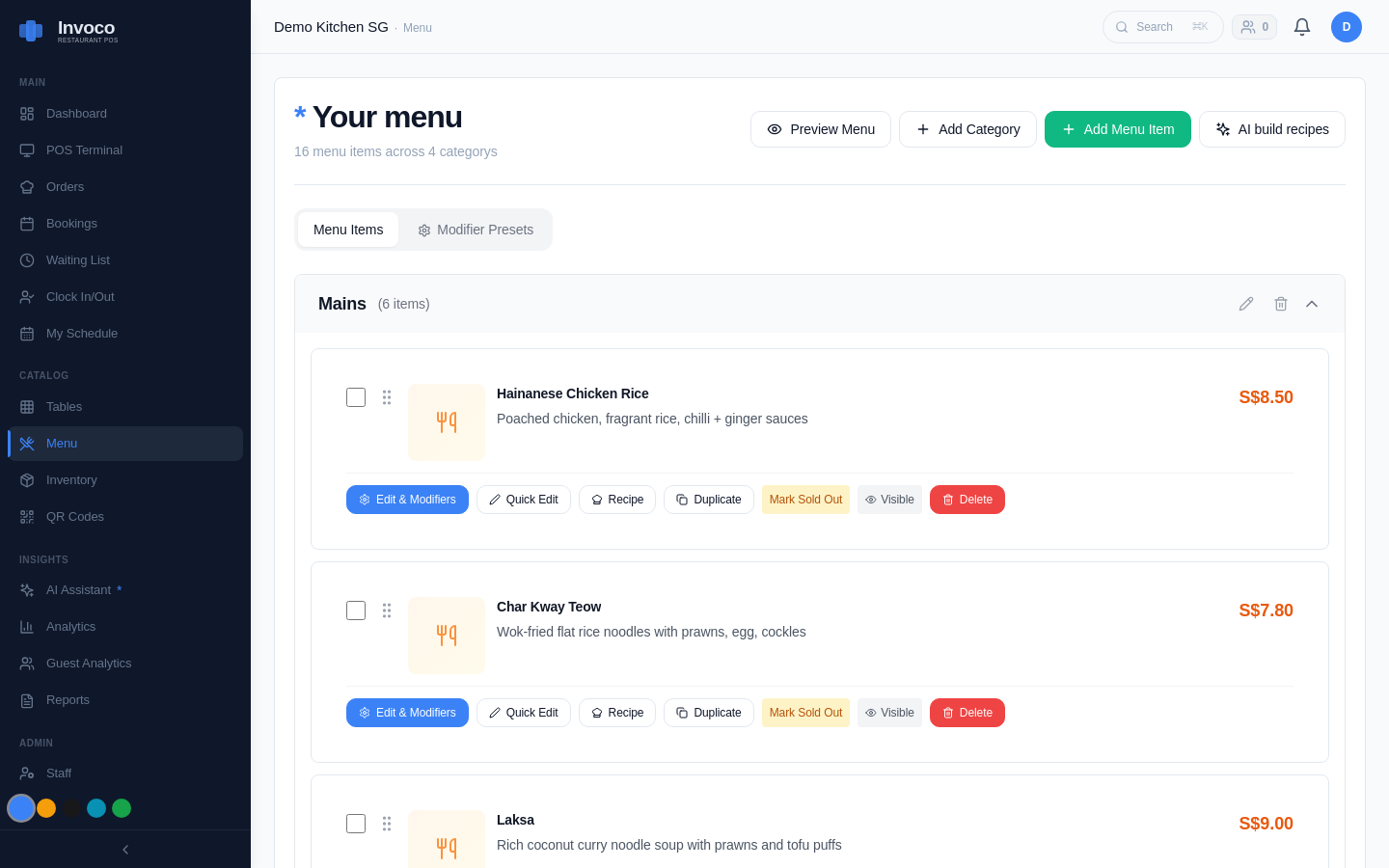 Invoco menu management page with categorised items and prices
Muis requires businesses to maintain records of all inputs, processes, and changes.[1] Post-certification, expect at least one audit per validity period, plus random checks for meat handlers.[4] Unannounced inspections scrutinise invoices, halal certs from suppliers, and facility layouts—no changes allowed without an amend app (10 working days processing).[1]
Paper piles mean hours hunting docs during audits. Spreadsheets crash when your part-timer keys in 50 ingredients wrong. Digital tools link supplier certs to inventory, auto-flag non-halal stock, and export audit-ready reports. For a kopitiam in Bedok with 20 SKUs, that's 2 hours saved weekly on stock checks.
Competitors like Qashier offer basic inventory, good for cashless at hawker stalls, but lack halal-specific flagging or OCR for cert scans. Eats365 handles modifiers well for zi char, yet manual entry leaves room for errors on supplier docs. Lightspeed shines in multi-outlet reporting, but at S$100+/mo per outlet, it's overkill for single HDB void deck spots.[web:competitors]
Invoco tip: Tag high-risk ingredients like gelatin or enzymes as 'halal-critical' to trigger double-approval on receipt.
Step-by-Step: Set Up Halal-Compliant Inventory Tracking
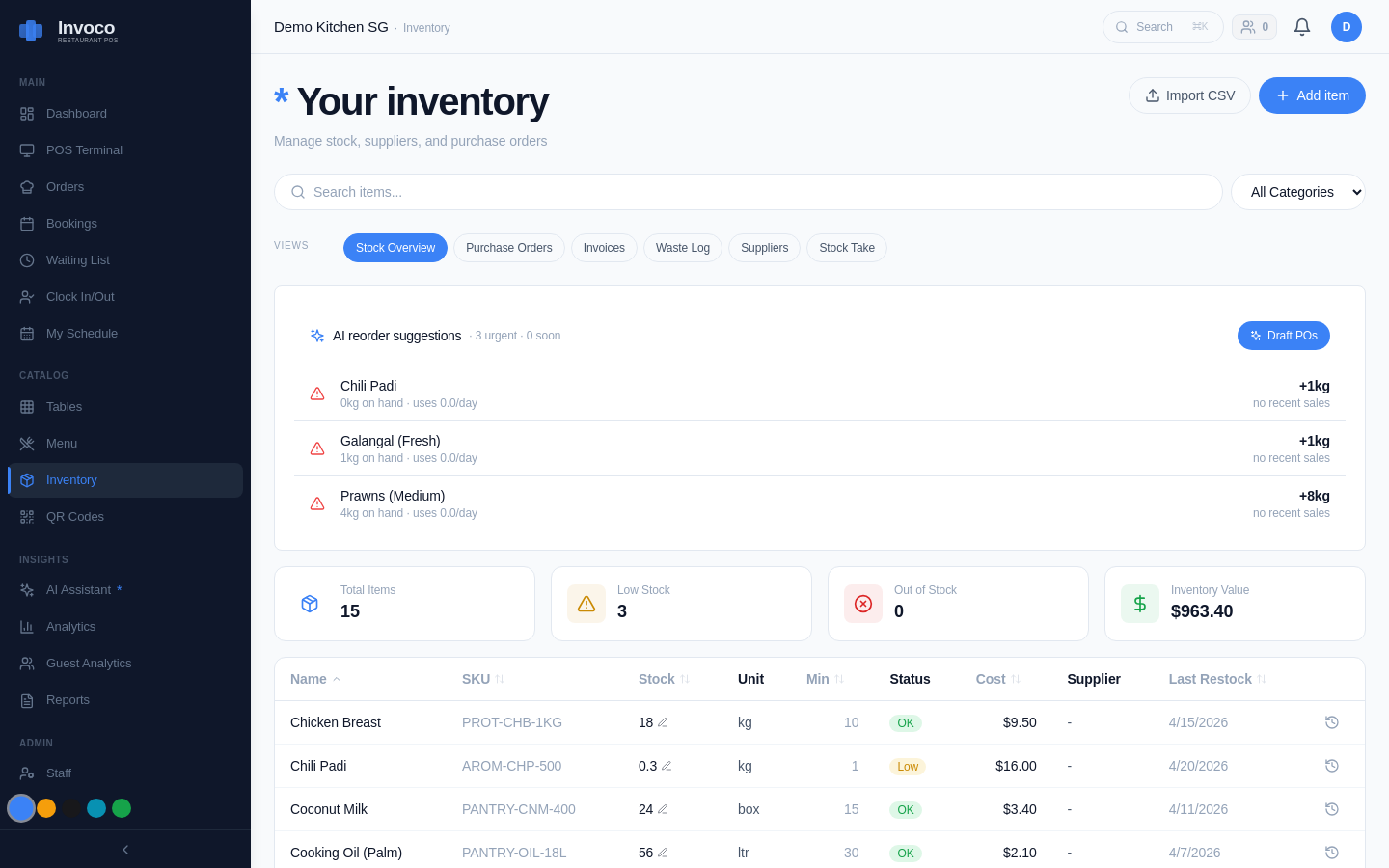 Invoco inventory management page tracking ingredients and stock levels
1. Map Your Halal Assurance Points (HAPs)
List every critical control: oil storage separate from non-halal, no cross-contamination in fryers, Muslim staff verifying deliveries. Muis HalMQ demands monitoring systems and corrective actions for each HAP.[2] Use a tool with custom fields—snapshot this list as your baseline.
Real calc: A Tanjong Pagar cafe with 15 menu items has ~40 ingredients. At 5min/doc to verify certs manually, that's 3.3 hours monthly. Digital cuts it to 30min.
2. Digitise Supplier Certs with OCR
Snap photos of every supplier halal cert on delivery. Upload to AI OCR that extracts expiry dates, cert numbers, and ingredients. Link to your ingredient database. If a cert lapses, auto-alert before you use the stock.
For amend apps (e.g., new supplier), pull the report in seconds for the E-Service portal.[1] No more 'where's that PDF?' panic.
3. Track Ingredients with Halal Status
Assign each ingredient a status: Muis-certified, self-declared, pending review. Weighted-average costing recomputes menu costs when prices shift, but add a halal flag to block non-compliant items in recipes. Your rendang shouldn't accidentally pull non-halal coconut milk.
Cross-reference with SFA food import rules, which align with Muis on halal labelling.[external:sfa]
4. Log Changes and Generate Audit Trails
Menu tweak? Supplier switch? Submit amend via E-Service (2 weeks).[1] Your system timestamps everything, exports a changelog with cert attachments. During audits, hand over a single PDF: 'Here's our oil supplier cert from 15 Sep 2025, batch used 1-30 Oct.'[1]
5. Schedule Reviews and Renewals
Set reminders 150 days pre-expiry (beats Muis' 120-day auto-submit).[1] Run variance reports: beginning stock + purchases - ending = usage. Flag overages that might signal cross-use.
Troubleshooting: Cert OCR misreads? Bounding boxes highlight errors for quick fix. Non-halal sneaks in? Ingredient-level variance pings over-budget or odd usage.
Link this to broader ops like inventory management for perishable items, where halal meats spoil fast.
How Invoco Handles Your Halal Records Pain
You're juggling supplier PDFs, expiry tracking, and Muis audit prep on top of dinner rush at your Jurong East kopitiam. Invocos AI invoice OCR scans halal certs from photos, extracts details like cert number and expiry, then posts to inventory at the exact price. Link supplier certs to the 67 pre-seeded Singapore ingredients (e.g., palm oil, ikan bilis). When a cert lapses, COGS variance flags it before it hits recipes. Multi-outlet? Row-level security keeps each branch's halal logs separate. Visit Invoco to cut audit prep from days to minutes—stay compliant without extra staff.==
Beyond Basics: Grants and Multi-Outlet Scaling
Fund your switch via IMDA's Productivity Solutions Grant—up to S$30k for POS with inventory.IMDA PSG. Halal tools qualify as they boost compliance efficiency.
For chains, check best inventory software for multi-outlet F&B in Singapore. Muis demands facility-specific records, so tenant isolation matters.[1]
Pair with Xero for GST on halal sales—IRAS requires accurate input GST claims on cert-verified purchases.IRAS GST.
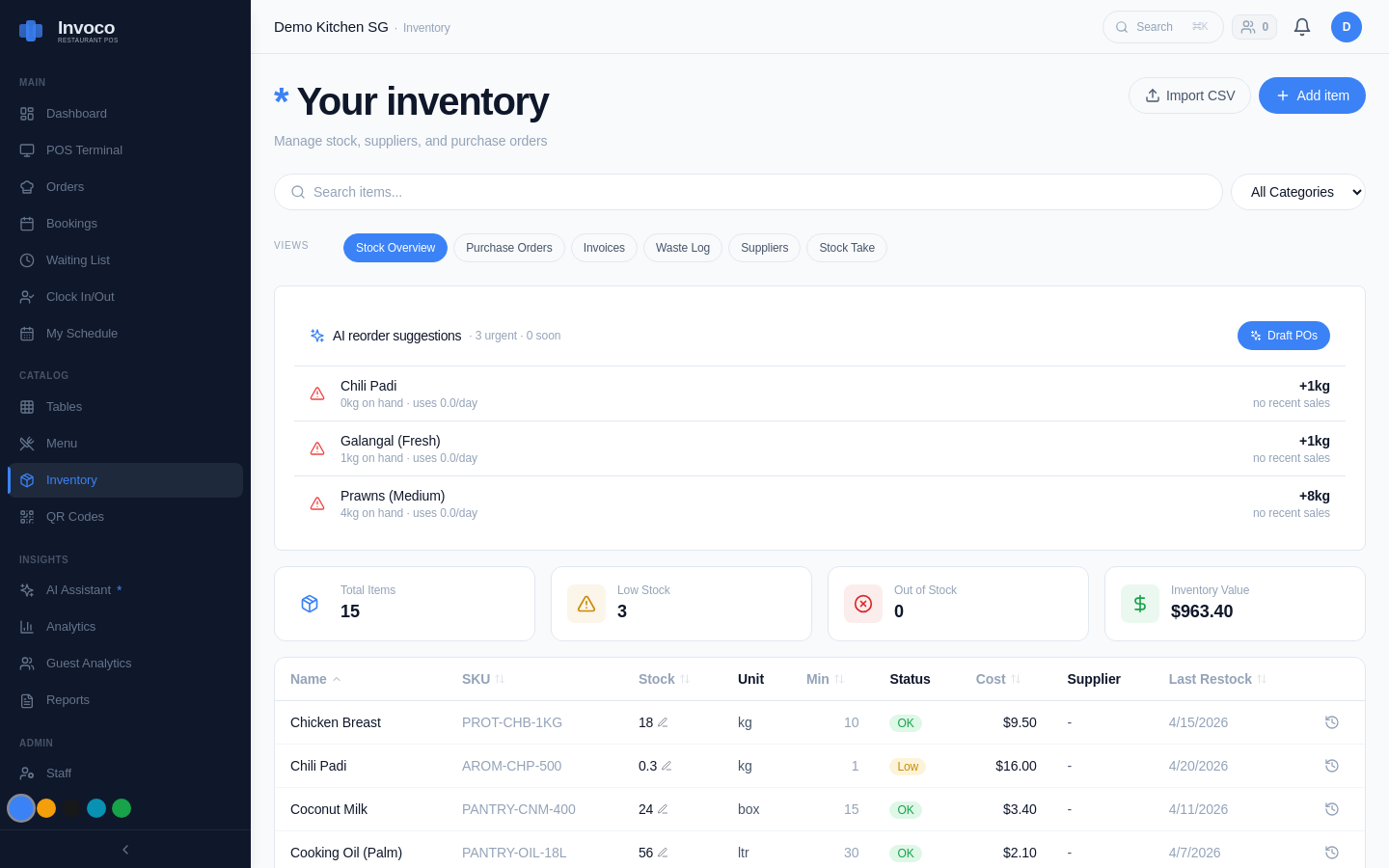 Invoco inventory management interface showing ingredients table with halal status flags, supplier certificate details, expiry dates, and AI-powered low-stock alerts for halal-criti
FAQ
How often does Muis audit? At least once per 1-2 year cert, more for meat processors or poor records.[4]
What if I change suppliers? File amend app via E-Service; processing in 10 working days.[1]
Free tools enough? Spreadsheets work for 5 SKUs, but scale fails—digital starts at S$49/mo.