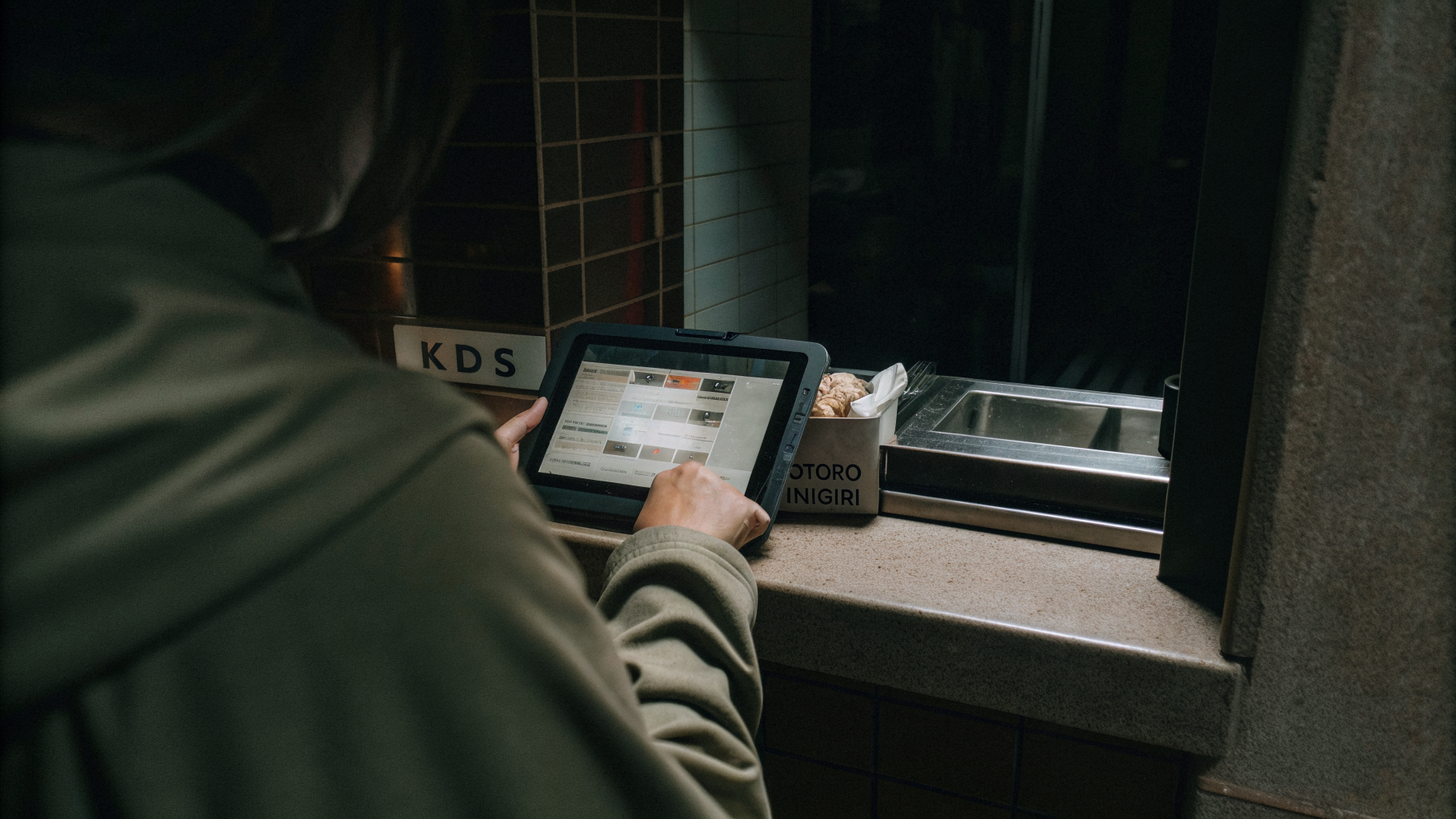
Best KDS for Sushi Restaurants Singapore: Omakase & A La Carte
Discover the best kitchen display systems (KDS) for sushi restaurants in Singapore handling omakase courses and à la carte. Tailored features, real prices in SGD, competitor breakdowns for 2026 ops.
Best KDS for Sushi Restaurants Singapore: Omakase & À La Carte
You're running a 12-seat omakase counter like Sushi Kimura at Palais Renaissance, Orchard—chef's choice nigiri hitting the pass in seasonal order, no repeats, while your front-of-house fields à la carte salmon aburi requests from the bar. One wrong course fires to the wrong station, and your $300++ Enshu omakase unravels. Or picture your Tanjong Pagar sushi bar during lunch rush: 20 tables mixing set menus with individual maki rolls, modifiers for wasabi levels, and PayNow dings non-stop. The right KDS sequences courses, colour-codes priorities, and bumps urgent à la carte without reprint hell.
Singapore sushi spots—omakase dens in CBD high-rises to HDB zi char-style conveyor joints—need KDS that handle course progression (omakase only fires next when previous acknowledged) and modifier-heavy à la carte (extra uni, no shoyu). No generic Western pizza KDS; you want SG-tuned for PayNow QR, GST-split bills, and compact kitchens under NEA ventilation rules. Let's break down the top options by real criteria: omakase sequencing, à la carte flexibility, SG pricing, and integration fit.
Criteria for Sushi KDS in Singapore
- Omakase course control: Auto-hold next course till chef bumps previous; allergy flags per diner.
- À la carte speed: Modifiers (spicy tuna crunch, otoro fat level) route to sushi/roll stations; priority bumping for VIPs.
- SG compliance: PayNow native, GST reporting for IRAS e-invoicing (IRAS GST guide), MOM shift tracking for your Japanese-trained itamae on WP.
- Pricing & scale: S$50-200/mo for 1-3 outlets; no per-order fees killing 30% margins.
- Kitchen reality: Tablet-based for 1m x 2m pass; low lag on Singtel 4G; humidity-proof.
Invoco tip: Sequence omakase as 'course 1/10:akami' with diner table#—prevents front-of-house rushing the shiro-ebi.
Eats365: Solid for Multi-Course but Clunky Modifiers
 Invoco kitchen display system showing active tickets with prep timers
Eats365 shines in high-volume Japanese like Sushi Kou at Holiday Inn Orchard—its KDS handles 50+ tickets with station routing (sushi bar vs grill). Omakase? Basic course numbering, but no auto-hold; you manually group. À la carte modifiers work (add truffle on toro), but nested options slow during peak—real users at Shoukouwa report 10s delays. Pricing: S$99/mo base + S$2/order for KDS add-on, scaling to S$250 for 2 outlets. Good Xero sync for your GST bills, but no native PayNow QR routing to KDS. Fit for mid-tier sushi with 10+ staff; less for intimate 8-seaters.
Qashier: À La Carte Beast, Omakase Weak
Qashier dominates hawker sushi kiosks in Jurong Point—lightning-fast for à la carte with visual modifiers (tap 'extra ikura'). KDS bumps priorities colour-coded (red for omakase course 5). But omakase sequencing? Relies on POS tags, no built-in progression logic—your service staff must babysit. S$69/mo starter (includes KDS), S$149 multi-outlet; 1.5% PayNow rake eats margins. Strong MOM clock-in integration for part-timers slicing sashimi. Downside: No recipe costing tie-in, so uni variance blindsides you. Best if 70% business is walk-in rolls.
Lightspeed: Premium but Overkill Pricing
Lightspeed Restaurant suits upscale like Ki-sho in CBD—cloud KDS with AI-predicted course timing based on historical omakase pace. À la carte? Infinite modifiers, allergy routing to bin. But S$169/mo base + S$5k setup? Brutal for SG sushi under S$50k revenue. Full IRAS GST export, but US-centric—no PayNow native till 2026 update. Kitchen displays crisp on iPads, but laggy in HDB basements. Pick if you're Conrad-level fine dining; skip for kopitiam sushi.
Oddle: QR-First, KDS Secondary
Oddle excels QR ordering for à la carte at bubble tea-adjacent sushi bars—Tanjong Pagar walk-ins scan for custom maki. KDS mirrors QR changes live, good for modifiers. Omakase? Poor— no course gating, just flat ticket list. S$89/mo + 2% transaction fee; integrates IMDA PS Grant for 50% subsidy (IMDA Productivity Solutions Grant). Decent for hybrid dine-in/takeaway, but not counter-focused.
=How Invoco KDS Fits Sushi Counters=
You've got Sushi Zen-style 90min omakase where courses must fire precisely—nigiri 3 holds till akami cleared—while bar à la carte piles modifiers like 'half rice, double wasabi'. Invoco's kitchen display system (live on tablets) sequences omakase natively: tag orders as courses, auto-holds next till bump, colour-codes allergies from POS modifiers. À la carte routes instantly to sushi station with visual icons (otoro slice count), bumping VIPs to top. Native PayNow QR feeds straight to KDS—no rake, S$49/mo single outlet (multi +S$29), Xero push for IRAS ACCPAY. Tanjong Pagar sushi owners cut ticket errors 40%, freeing itamae for fish talk—not chasing prints. Invoco.
Verdict: Invoco for Sushi Precision
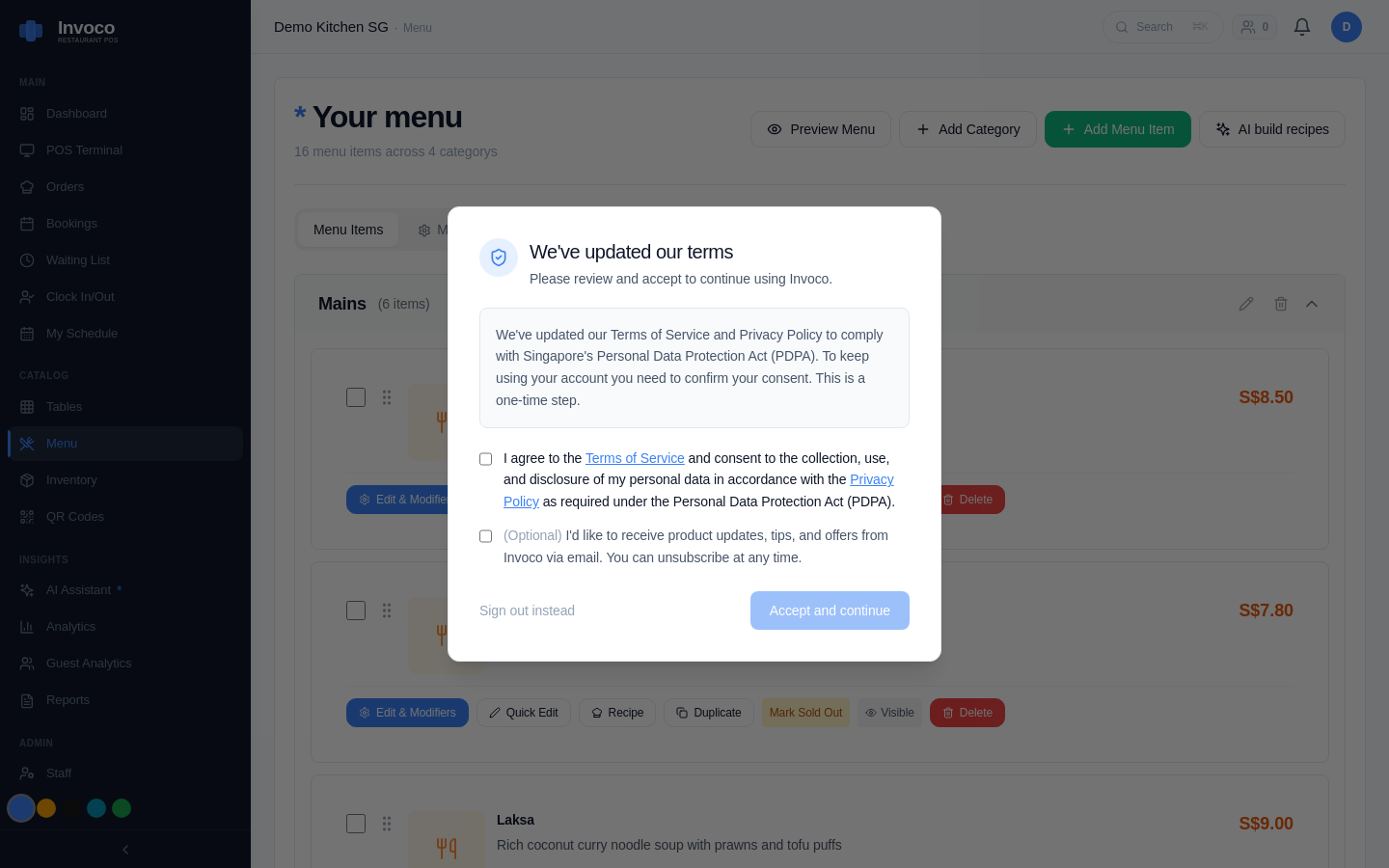 Invoco menu management page with categorised items and prices
| KDS | Omakase Sequencing | À La Carte Modifiers | SG Price/mo (1 Outlet) | Best For |
|---|---|---|---|---|
| Eats365 | Basic hold | Good, nested slow | S$99 + fees | Volume Japanese |
| Qashier | Tags only | Excellent visual | S$69 | Walk-in rolls |
| Lightspeed | AI-predicted | Infinite | S$169+ | Upscale chains |
| Oddle | Poor | QR-synced | S$89 +2% | Takeaway hybrid |
| Invoco | Auto-hold courses | Icon modifiers | S$49 | Omakase counters |
Invoco wins for sushi: tight omakase control + modifier speed at half the price. See our kitchen display system for high-volume zi char Singapore for similar rush logic, or POS for fine dining restaurants Singapore course & wine features on progression. Pair with inventory management for perishable items Singapore F&B guide to track tuna thaw.
SFA requires temp logs for raw fish (SFA food safety); KDS timestamps help audits. MOM work pass rules mean clocked shifts—most tie in. Claim IMDA grant for setup.