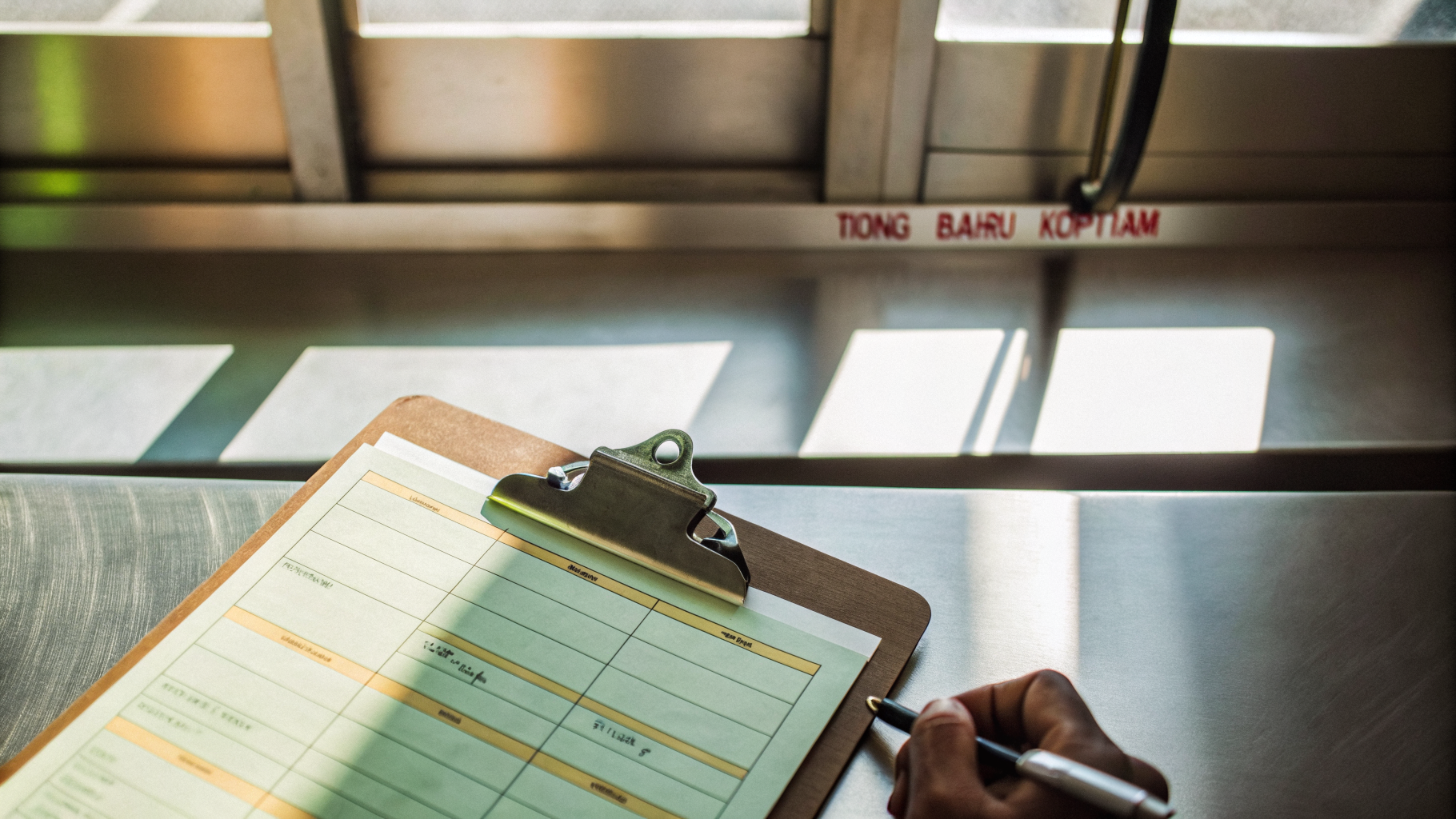
Staff Scheduling Compliance Singapore: MOM Rules for Breaks, Overtime & Public Holidays
Singapore staff scheduling compliance guide: MOM rules for breaks, overtime limits (72 hrs/month), rest days, public holidays, and penalties for F&B operators.
TL;DR
 Invoco orders page with active and completed tickets
Your staff roster must comply with the Employment Act or you face fines up to S$5,000 per breach. Standard working hours cap at 44 per week / 8 per day. Overtime is capped at 72 hours per month (unless you apply for an exemption from MOM). Employees get at least one rest day per week, paid public holidays (11 per year), and breaks after 6 hours of continuous work. If staff work on rest days or public holidays, you must pay extra salary or grant time off in lieu—no exceptions.
---
You're running a busy zi char stall in Tiong Bahru with four staff on rotating shifts. It's Chinese New Year week, orders are tripling, and your head cook is already at 68 overtime hours for the month. Your manager wants to add another 6-hour shift on CNY Eve. You pause. Is that legal? What do you owe him? And if you get it wrong, what's the fine?
This is the reality for most Singapore F&B operators: compliance isn't optional, and the rules are specific. The Ministry of Manpower (MOM) Employment Act sets hard limits on hours, breaks, and holiday pay. Breach them, and you're liable for back pay, penalties, and reputational damage. Yet many owner-operators still wing it—tracking shifts on WhatsApp, calculating overtime in their head, and hoping no one lodges a complaint.
Let's walk through the exact rules, the calculation methods, and what happens when you slip up.
The 44-Hour Week and 8-Hour Day Rule
Under the Employment Act, a standard work week is capped at 44 hours, and a standard day at 8 hours[1]. If your employee works fewer than 5 days a week, you can stretch a single day to 9 hours—but the weekly total still can't exceed 44[1].
This applies to all staff covered by Part IV of the Employment Act: cooks, dishwashers, waiters, delivery riders, and most front-of-house roles earning up to S$2,600/month (non-workmen) or S$4,500/month (workmen)[1].
Managers and executives are exempt, but if you're unsure whether a role qualifies, check with MOM or your employment lawyer. Misclassifying a manager as a workman to dodge overtime pay is a common trap.
Example: Your kopitiam cashier works Monday–Friday, 8 hours each day = 40 hours. That's compliant. But if you ask her to work 9 hours on Friday to cover a sick colleague, you've now hit 49 hours for the week—5 hours over the cap. Those 5 hours must be paid as overtime at 1.5× the hourly basic rate, within 14 days[1][2].
Invoco tip: Use a staff clock-in system with PIN-based tracking to log shift start and end times automatically—no manual spreadsheets, no disputes.
The 72-Hour Overtime Cap (and How to Exceed It)
Once you've hit 44 hours in a week, anything extra is overtime. But there's a monthly ceiling: 72 hours of overtime per employee per month[1][2][7].
If you need staff to work beyond 72 hours of overtime in a month, you must apply for an exemption from MOM[2][7]. This is not automatic—MOM reviews the business case. Certain work (e.g., emergency repairs, public safety) may qualify; routine peak-season demand typically does not[7].
Crucially: work on rest days and public holidays does not count toward the 72-hour limit—unless the employee works beyond their usual daily hours on those days[7]. If your cook normally works 8 hours and you ask him to work 10 hours on a public holiday, those 2 extra hours count toward the 72-hour cap[7].
Example: Your hawker stall cook works 40 hours Monday–Friday. On Saturday (his rest day), you ask him to work 8 hours. Those 8 hours do not count toward the 72-hour monthly overtime limit. But if you ask him to work 10 hours on Saturday, the extra 2 hours do count[7].
Breaks: The 6-Hour Rule
If an employee works continuously for more than 6 hours, they must be given a break[2]. If the shift is 8 hours or longer, breaks must total at least 45 minutes for meals[2].
This is often overlooked in hawker and food-court settings where staff eat standing up or skip breaks entirely. Legally, you must provide the time and a space (even a stool in the back). If an employee works through a break because of customer demand, you still owe them the break time—either paid or as time off later.
Rest Days: One Per Week, Minimum
Every employee is entitled to at least one rest day per week[1]. Sunday is the default for most roles, but you can designate a different day if it's written in the employment contract and agreed in writing[1].
If an employee works on their rest day:
- If they work 50% or more of their regular daily hours, you must pay an extra day's salary (at the basic rate)[1][5].
- If they work 4 hours or less, you can grant 4 hours of time off in lieu on a working day[4].
- If they work more than 4 hours, you must grant a full day off in lieu on a working day[4].
Alternatively, you can pay the extra salary instead of granting time off—but the employee must agree in writing[1].
Example: Your barista's rest day is Sunday. On a busy Sunday, you ask her to work 6 hours. You owe her either (a) an extra day's salary at her basic rate, or (b) a full day off during the following week. You cannot ask her to "make it up" by working fewer hours the next day—the law requires a full day off or full-day pay[4].
Public Holidays: 11 Per Year, Plus Extra Pay or Time Off
Singapore has 11 gazetted public holidays per year[4]:
1. New Year's Day 2. Chinese New Year (1st day) 3. Chinese New Year (2nd day) 4. Hari Raya Puasa 5. Hari Raya Haji 6. Good Friday 7. Labour Day 8. Vesak Day 9. National Day 10. Deepavali 11. Christmas Day
Every employee covered by the Employment Act is entitled to paid public holidays[4]. If a public holiday falls on a non-working day (e.g., Saturday for a 5-day-week employee), the next working day is observed as the paid holiday[3][4].
If you require an employee to work on a public holiday that falls on a working day, you must pay:
- An extra day's salary at the basic rate (on top of their usual pay for that day), or
- Grant a full day off in lieu[4].
If the employee works beyond their normal daily hours on a public holiday, those extra hours are paid as overtime at 1.5× the hourly basic rate[3][5].
Example: Your zi char stall is open on Chinese New Year (a public holiday). Your cook's normal shift is 8 hours. You ask him to work 10 hours on CNY. You owe him: (a) an extra day's salary at his basic rate, plus (b) 2 hours of overtime pay at 1.5× his hourly rate. This is on top of his regular pay for the 8 hours worked[3][5].
How to Calculate Overtime Pay
Overtime is paid at 1.5 times the hourly basic rate[1][2]. The "basic rate" excludes bonuses, allowances, and commissions—it's the fixed hourly or daily wage in the employment contract.
Calculation:
Hourly basic rate = Monthly basic salary ÷ 26 (standard working days) ÷ 8 (standard working hours per day)
Overtime hourly rate = Hourly basic rate × 1.5
Overtime pay for one hour = Hourly basic rate × 1.5
Example: Your cook earns S$2,600/month basic salary.
Hourly basic rate = S$2,600 ÷ 26 ÷ 8 = S$12.50/hour
Overtime rate = S$12.50 × 1.5 = S$18.75/hour
If he works 5 hours of overtime, you owe him 5 × S$18.75 = S$93.75, paid within 14 days of the end of the salary period[2].
How to Avoid "Accidental Overtime"
Many operators slip into non-compliance without realizing it. A few common traps:
- Creeping daily hours: You ask staff to stay 30 minutes late, three times a week. That's 1.5 hours extra per week, or 6 hours per month—it adds up, and it's overtime[1].
- Unpaid breaks: If you don't formally grant breaks, the time still counts as work. A 9-hour shift with no break is 9 hours of work, not 8[2].
- Misclassifying roles: Calling a senior cook a "supervisor" to avoid overtime rules is illegal and will be challenged by MOM if audited[1].
- Forgetting public holiday overtime: You pay the extra day's salary but forget to pay the overtime component for hours worked beyond 8. That's a breach[3].
Invoco's Staff Clock-In and Shift Tracking
The core pain: you're manually tracking shifts on a spreadsheet or WhatsApp, calculating overtime in your head, and hoping you don't miss a breach. One missed overtime payment, and an employee can lodge a complaint with MOM—resulting in back pay, penalties, and reputational damage.
Invoco's staff clock-in module uses PIN-based authentication to log shift start and end times in real time. Every shift is timestamped and stored in the system. At month-end, you can pull a report showing total hours worked, overtime hours, rest days taken, and public holidays worked—all automatically calculated. No spreadsheets, no disputes. When you need to verify compliance for an MOM audit or calculate back pay, the data is there, auditable, and defensible. For a Tiong Bahru zi char stall with four staff on rotating shifts, this cuts manual admin by 3–4 hours per month and eliminates the risk of accidental non-compliance.
What Happens If You Breach the Rules
If MOM finds that you've underpaid overtime, failed to grant rest days, or forced staff to work beyond the 72-hour cap without an exemption, you face:
- Back pay to the employee (with interest, if applicable)[1].
- Fines up to S$5,000 per breach under the Employment Act[1].
- Reputational damage if the case is publicized or if the employee leaves a negative review online.
- Potential criminal charges if the breach is egregious or repeated[1].
MOM also conducts random audits of F&B businesses, especially during peak seasons (CNY, Ramadan, year-end) when overtime is common. If you can't produce clear records of hours worked and overtime paid, you're at risk.
FAQ
Q: Can I ask staff to waive their rest day or public holiday entitlements?
No. Rest days and public holiday pay are statutory rights under the Employment Act. You cannot contract out of them, even if the employee agrees in writing[1][4]. However, you can offer time off in lieu instead of extra pay (for rest days and public holidays), provided the employee agrees and you grant the time off within a reasonable period[4].
Q: What if my employee is on a salary, not hourly? Do I still owe overtime?
Yes. If the salary is below the threshold (S$2,600/month for non-workmen, S$4,500/month for workmen) and the role is covered by Part IV of the Employment Act, overtime is owed. You calculate the hourly rate by dividing the monthly salary by 26 days and 8 hours[1][2].
Q: Can I apply for an overtime exemption to avoid paying 1.5× rates?
No. An exemption allows you to ask staff to work more than 72 hours of overtime per month, but you still pay 1.5× the rate for every overtime hour. The exemption doesn't waive the overtime rate—it only lifts the monthly cap[7].
---
Compliance is not a one-time checklist. It's a monthly discipline: track hours, calculate overtime, pay on time, and keep records. If you're managing multiple outlets or staff on complex rosters, a POS system with staff performance reports can automate the tracking and flag potential breaches before they happen. Your staff will thank you, and MOM will have nothing to audit.
 Invoco POS terminal checkout view with menu and payment options
Sources
- Work Schedules, Overtime & Public Holidays - Singapore Shift Work ...
- Breaks, Overtime and Rest Days in (Singapore)
- Public Holiday Rules in Singapore in 2026 - Playroll
- Public holidays: entitlement and pay - MOM
- Can You Make Employees Work On Public Holidays In Singapore?
- Comprehensive Guide to Time Off in Lieu for Employers and HR in ...
- Hours of work, overtime and rest day - MOM