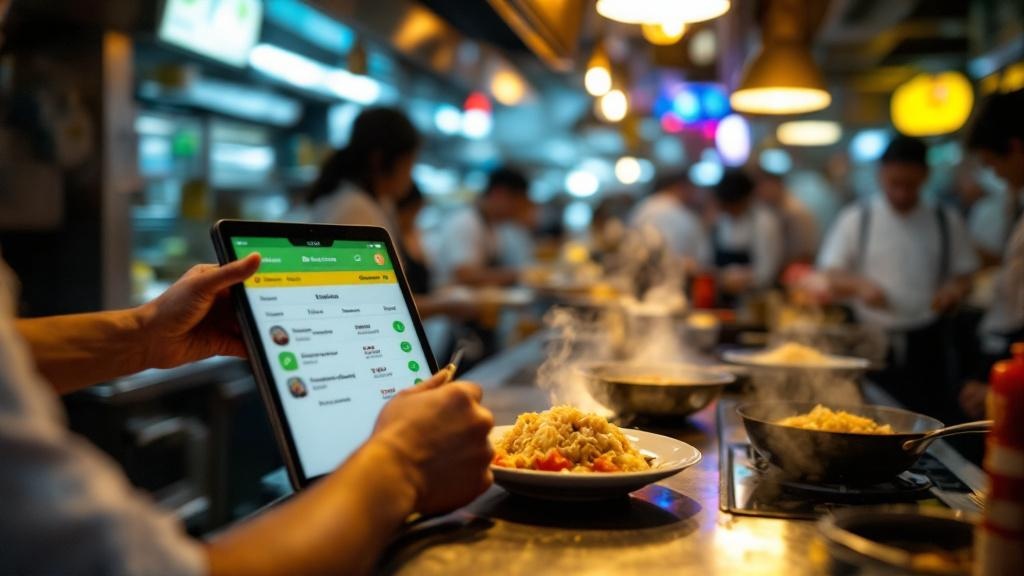
How to Integrate Delivery Platforms with POS in Singapore
Learn how to integrate delivery platforms like GrabFood and Foodpanda with POS in Singapore. Discover top systems, benefits, and steps to automate orders, sync menus, and boost efficiency for your restaurant or hawker stall.
TL;DR: Integrate GrabFood and Foodpanda with your POS to eliminate manual order entry, sync menus in real-time, and cut errors by up to 100% during peaks.
Singapore F&B operators rely heavily on delivery platforms. GrabFood and Foodpanda drive significant revenue, but juggling separate tablets for each leads to missed orders, wrong items, and staff shouting across the kitchen during rushes[3]. Without integration, you re-key every order into your POS, wasting time and inviting errors. Integrated POS systems pull these orders directly into your workflow, printing to kitchen displays automatically[1][2].
Why Delivery Integration Matters for Your Singapore Outlet
In Singapore's competitive F&B scene, delivery accounts for a large slice of sales. Operators report that manual handling of GrabFood and Foodpanda orders creates chaos: multiple devices clutter counters, staff duplicate data entry, and peaks overwhelm teams[3]. Integration solves this by routing all orders—dine-in, takeaway, delivery—through one terminal[2].
Key benefits include:
- Instant order notifications: New GrabFood or Foodpanda orders appear on your POS in seconds, no refreshing apps[1][4].
- Unified kitchen queue: Delivery tickets join dine-in orders on your kitchen display system (KDS), prioritized correctly[4].
- Error reduction: No re-entry means 100% order accuracy, as seen with digital routing to section printers[6].
- Centralized reporting: Track sales by platform, filter by item or time, and compare against fees for true margins[3].
Invoco tip: Use your POS's inventory module to flag high-usage ingredients from delivery spikes before stockouts hit.
Steps to Integrate Delivery Platforms with Your POS
Most Singapore POS providers offer plug-and-play integrations for GrabFood and Foodpanda. Here's the typical process:
1. Choose a compatible POS: Confirm GrabFood/Foodpanda support. No custom coding needed for vendors like Qashier or iCHEF[1][2]. 2. Link accounts: Log into your POS dashboard, enter GrabFood/Foodpanda credentials. Menus sync automatically[2][5]. 3. Map menu items: Match POS products to platform listings. Handle modifiers and allergens once[1]. 4. Test orders: Place sample deliveries; verify they print to kitchen printers without manual input[6]. 5. Go live: Update prices or availability centrally—changes push to both platforms instantly[3].
Setup takes minutes with zero downtime. Qashier emphasizes no separate devices post-integration[2].
Top POS Systems with GrabFood and Foodpanda Integration in Singapore
Several systems stand out for reliability and ease:
| POS System | Key Features | Delivery Platforms | Best For | |------------|--------------|---------------------|----------| | iCHEF | 5-second order routing to POS/kitchen print; real-time menu sync iCHEF Delivery Integration | GrabFood, Foodpanda | Cafes needing instant notifications | | Qashier | Single terminal for all orders; menu/inventory management Qashier Integration | GrabFood, Foodpanda | Kiosks to cloud kitchens | | Eats365 | Consolidated reports; central menu dashboard Eats365 Blog | GrabFood, Foodpanda | Multi-outlet FSRs | | Klikit | KDS queuing; performance analytics Klikit Foodpanda | Foodpanda (GrabFood similar) | Busy restaurants prioritizing speed | | FeedMe | Menu/price sync FeedMe Integration | GrabFood, Foodpanda, ShopeeFood | Broad platform coverage | | iMakan | QR/kiosk + delivery in one portal; auto-itemization iMakan GrabFood | GrabFood | Outlets with self-ordering |
Pick based on your outlet size and existing setup. All handle Singapore payments like PayNow seamlessly[4].
How Invoco Fits Into Your Delivery Workflow
You're already tracking sales across channels, but delivery orders from GrabFood and Foodpanda still hit separate apps, forcing manual POS entry that spikes errors and delays kitchen prep. Invoco's POS & order taking module aggregates these via platform APIs (GrabFood/Foodpanda integration is aggregation-ready), pulling orders into your central dashboard alongside dine-in and QR orders. Kitchen display shows everything queued by priority, while the inventory + recipe costing module auto-adjusts stock levels from delivery volumes using weighted-average costs on your 67 pre-seeded Singapore ingredients. Check it out at Invoco—you'll cut re-keying time by hours weekly, spot over-usage variances daily, and reclaim margins squeezed by untracked delivery peaks.
Regulations and Best Practices for Singapore F&B
IRAS requires accurate GST recording on all sales, including delivery. Integrated POS simplifies this by logging platform orders with fees separated[3]. SFA food safety rules apply: ensure KDS flags allergens from modifiers[4]. MOM staff rules unchanged—integration frees time for breaks, not data entry.
Pro tips:
- Sync menus weekly to match costs; delivery promos erode margins fast.
- Monitor AOV per platform—GrabFood often higher than Foodpanda[3].
- Use reports to negotiate rider fees based on volume data.
FAQ
How long does POS-delivery integration take in Singapore?
Setup is hassle-free, often under 30 minutes with no downtime. Menus sync instantly, orders flow in seconds[1][2].
Does integration work with all POS systems?
No, only those with official API links like Qashier, iCHEF, or Eats365. Check vendor docs first[4].
Can I manage GrabFood and Foodpanda menus from my POS?
Yes, update prices, availability, and items centrally—they push to platforms in real-time[3][6].
What if I have multiple outlets?
Multi-outlet POS like Eats365 handles per-location syncing and reports[3].
Is there extra cost for delivery integration?
Most include it free in subscriptions; no per-order fees beyond platform commissions[2].
Sources
- iCHEF Delivery Integration|iCHEF POS System - Singapore
- Food delivery partners integration - Qashier Singapore
- GrabFood vs foodpanda: Picking the Best Partner in SG - Eats365
- Foodpanda Integration for Singapore Restaurants | Klikit
- FeedMe POS System integrated with GrabFood, foodpanda and ...
- iMakan x GrabFood Integration. Benefits forF&B merchants