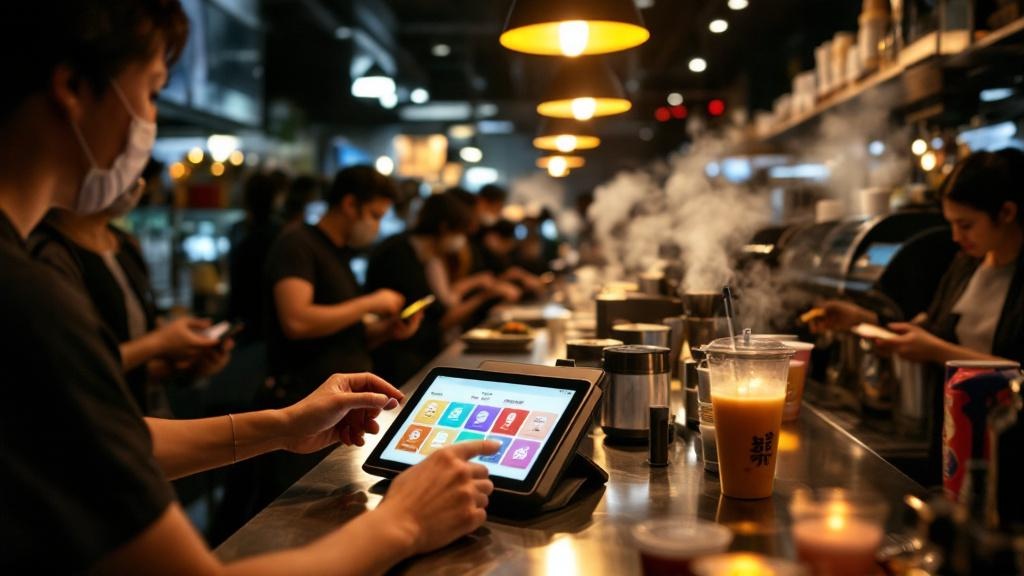
Choosing the Best POS for Your Bubble Tea Shop in Singapore
Find the best POS for bubble tea shops in Singapore. Learn key features like QR ordering, inventory management, and GST compliance to boost efficiency and cut costs.
TL;DR: The best POS for a bubble tea shop in Singapore needs to handle high transaction speeds, manage complex customizations, control inventory tightly, and simplify GST compliance. Look for features like QR ordering, recipe costing, and native PayNow integration to save time and reduce food waste.
What Makes a POS System Great for Bubble Tea Shops?
Running a bubble tea shop in Singapore is fast-paced. You're dealing with queues during peak hours, endless customizations (sugar levels, ice, toppings), and perishable ingredients that can eat into your margins if not tracked. A good point-of-sale (POS) system isn't just about ringing up sales—it's your operations backbone. It should help you serve customers quicker, keep stock accurate, and handle the paperwork so you can focus on brewing.
Speed and Order Accuracy During Rushes
Bubble tea shops see spikes—lunch hours, after-school rushes, weekends. Your POS must process orders in seconds, not minutes. Look for a tablet or web-based interface that's intuitive for staff, with quick-tap buttons for popular drinks and modifiers. Split-bill functionality is handy for groups, and kitchen display systems (KDS) prevent order mix-ups by showing drink details clearly to your prep team. This reduces errors and keeps the line moving.
Managing Customizations Without Chaos
A typical order might be: "Brown sugar milk tea, 30% sugar, less ice, with pearls and grass jelly." Your POS should handle modifiers easily, charging extra for toppings if needed, and ensuring the kitchen gets the full specs. Systems that allow you to set up drink templates with add-ons save setup time and prevent pricing mistakes.
> Invoco tip: Use a POS with pre-built modifier groups (like sugar levels and toppings) to speed up order entry during peak hours.
Inventory Control to Minimize Waste
Bubble tea ingredients—tapioca pearls, fruit syrups, dairy—are costly and perishable. Shrinkage from over-pouring or spoilage can hurt your bottom line. A POS with inventory tracking lets you link ingredients to recipes, so each sale deducts stock automatically. You'll know exactly when to reorder and spot discrepancies fast. Some systems even flag when usage exceeds what's expected, helping you tighten controls.
Simplifying GST and IRAS Compliance
In Singapore, you must file GST returns if your annual taxable turnover exceeds S$1 million (as of 2024), and even non-GST registered businesses need clean records for IRAS. A POS that generates detailed sales reports, tracks GST on transactions, and integrates with accounting software like Xero cuts hours off monthly bookkeeping. Native PayNow support ensures digital payments are recorded seamlessly, reducing manual entry errors.
Key Features to Look for in a Bubble Tea POS
Not all POS systems are built equal. Here are the must-haves for Singapore bubble tea shops.
QR Ordering for Self-Service
QR code ordering lets customers scan a code at the table or counter, browse the menu on their phone, and place orders without queuing. It speeds up service during rushes and reduces staff workload. Ensure the system requires no app download—just a mobile browser—and integrates directly with your POS so orders flow to the kitchen instantly.
Real-Time Inventory and Recipe Costing
You need to know your food cost percentage to price drinks profitably. Look for a POS that does recipe costing: you input ingredient quantities and costs, and it calculates the cost per drink. When supplier prices change, it should update automatically. Weighted-average costing (common in Singapore) gives you accurate inventory values by averaging purchase prices, which is crucial for managing fluctuating costs of items like fresh fruit.
Payment Integration with PayNow and Cards
Singaporeans love cashless options. Your POS should accept PayNow via QR or on-device, plus credit/debit cards through providers like Stripe. Avoid systems that take a percentage cut on cash or PayNow transactions—flat monthly fees are more predictable for small businesses. Receipts via email or SMS save paper and make returns easier.
Reporting for Better Decisions
Sales reports show your top-selling drinks and peak times. Inventory reports highlight low-stock items and variance (the difference between expected and actual usage). For example, if you're using more pearls than sales suggest, you might have a portioning issue. These insights help you optimize menus and reduce waste.
Multi-Outlet Management for Chains
If you have or plan multiple shops, choose a POS that supports multi-outlet setups. You should be able to view sales across locations, manage centralized inventory, and set different roles for staff (e.g., manager vs. cashier). This keeps operations consistent as you grow.
How Invoco Handles Bubble Tea Shop Needs
If you're juggling stock counts, manual invoice entry, and GST headaches, Invoco offers a Singapore-built POS that tackles these pains directly. Its inventory and recipe costing module uses weighted-average costing with 67 pre-seeded Singapore ingredients, auto-updating menu costs when prices change—so you always know your food cost percentage. The AI invoice OCR lets you upload supplier invoices via PDF or photo; Gemini AI extracts line items, and on approval, stock posts at the invoice price, cutting inventory intake time from hours to minutes. For compliance, Xero integration pushes approved invoices as bills, auto-matching GST rates, and the COGS and ingredient variance report flags over-usage, helping you rein in shrinkage. With features like QR ordering, PayNow payments, and multi-outlet support, Invoco gives you real-time visibility into your operations, saving up to 10-15 hours a month on manual tasks.
Avoiding Common POS Pitfalls
Don't get stuck with a system that doesn't fit Singapore's context. Watch out for:
- High transaction fees: Some POS providers charge per sale, which adds up fast in high-volume bubble tea shops. Opt for transparent monthly pricing.
- Poor inventory features: Basic systems only track sales, not ingredient-level usage. Without recipe costing, you're guessing at food costs.
- No GST support: If it doesn't handle Singapore's GST reporting (currently 9% as of 2024), you'll spend extra time reconciling.
- Slow support: Choose a provider with local or responsive customer service—downtime during a rush means lost sales.
Making Your Decision
Start by listing your needs: How many daily transactions? What customizations do you offer? Do you need multi-outlet features? Test demos to see if the interface is quick for your staff. Check integration with your payment providers and accounting software. Read reviews from other Singapore F&B owners. A good POS should feel like a helper, not a hurdle—freeing you to focus on serving great bubble tea.
FAQ
Q: What's the most important feature in a POS for a bubble tea shop?
A: Speed and inventory control. You need fast order processing during rushes and tight tracking of perishable ingredients to minimize waste and cost.
Q: Can a POS help with GST filing in Singapore?
A: Yes. Look for systems that generate detailed sales reports with GST breakdowns and integrate with accounting software like Xero, which automates much of the filing process for IRAS compliance.
Q: Is QR ordering worth it for a small bubble tea shop?
A: Absolutely. It reduces queue times, cuts order errors, and lets staff focus on drink preparation, especially during peak hours. Many systems offer it at low cost.
Q: How does recipe costing work in a POS?
A: You input ingredients and their costs into the system, and it calculates the cost per menu item based on quantities used. When ingredient prices change, it updates automatically, giving you accurate food cost percentages.
Q: What should I avoid when choosing a POS?
A: Avoid systems with hidden fees, poor inventory tracking, or lack of Singapore-specific features like PayNow integration. Test the software during a busy period to ensure it's user-friendly under pressure.