Best Cashless Payment Setup for Hawker Stalls Singapore 2026
Compare PayNow, SGQR, GrabPay, and card payments for Singapore hawker stalls. Real fees, customer adoption, IMDA support, and which setup costs least.
Best Cashless Payment Setup for Hawker Stalls Singapore 2026
You're standing at your stall in Tiong Bahru hawker centre at 11:45 AM on a Friday. A customer orders a bowl of laksa, pulls out their phone, and asks: "Can I PayNow?" You nod, but inside you're wondering—what's the fee? Will the money land in my account today? And if I say no, how many sales am I losing?
That question haunts hundreds of hawker operators across Singapore. [IMDA's Hawkers Go Digital programme][1] has pushed digital payments hard, but the choice between PayNow, SGQR, GrabPay, and card readers isn't obvious. Each has different fees, customer adoption curves, and integration friction. This comparison cuts through the noise and shows you which setup makes sense for your stall.
The Payment Landscape: What's Actually Used at Hawker Stalls
First, the reality: cash still dominates[2]. Hawker centres, small food stalls, and older establishments may prefer cash, especially for small transactions. But the trend is unmistakable. [PayNow and SGQR codes are now common in hawker centres and neighbourhood stalls][3], and younger customers expect them.
The key distinction is who initiates the payment:
- PayNow: Customer scans your QR code or you enter their mobile number. Money lands in your bank account instantly, 24/7.
- SGQR: A single QR code that accepts multiple wallet apps (GrabPay, ShopeePay, Google Pay, etc.). Fees vary by wallet.
- Card readers: Tap/insert credit or debit cards. Charged per transaction (typically 1.5–2.5%).
- Wallet apps (GrabPay, ShopeePay): Customer tops up balance, scans your code. Cashback incentives vary.
Invoco tip: Most hawker stalls that go cashless start with PayNow (lowest friction), then add SGQR 3–6 months later once they see adoption.
PayNow: The Operator's Favourite
Fees: None. Zero. Your bank transfers the full amount.
Customer friction: Low. Customers scan your QR code or you enter their phone number. Instant confirmation.
Adoption: High among Singaporeans aged 20–55. Older customers and tourists may not use it.
Gotcha: [PayNow QR codes cannot be scanned by foreign Wise users][4], so international visitors are locked out.
Setup: Generate a PayNow QR code from your bank's app (DBS PayLah!, OCBC Digital, UOB Mighty, etc.). Print it, laminate it, stick it on your counter. Done.
PayNow is the lowest-cost, fastest-settling option for local customers. If your stall is in a neighbourhood hawker centre (Tiong Bahru, Tanjong Pagar, Bukit Merah), this alone will cover 60–70% of your cashless transactions within three months.
SGQR: The Wallet Aggregator
Fees: Depends on the wallet. [DCS Cards App charges 2% cashback to the customer (not you)][5]. [ShopeePay offers 1% coins for Hawker QR][5]. [Grab charges 0.3% on top-up][5]. [Google Pay has randomised cashback][5].
Customer friction: Medium. Customer sees your SGQR code and chooses which wallet to use. If their preferred wallet isn't linked, they abandon the transaction.
Adoption: Growing, but fragmented. Not every wallet is supported by every SGQR code—[the onus is on each vendor to tie up with different wallet apps for payment acceptance][6].
Setup: Apply for SGQR through your bank or a payment aggregator (e.g., HitPay, Stripe, Adyen). You'll get a single QR code that theoretically accepts multiple wallets. In practice, you'll need to negotiate with each wallet provider or use a third-party aggregator.
Reality check: SGQR is useful as a backup to PayNow, not a replacement. Most hawker operators find that 80% of their SGQR transactions come from one or two wallets (usually GrabPay or ShopeePay), so the "aggregation" benefit is overstated.
Card Readers: The Tourist Tax
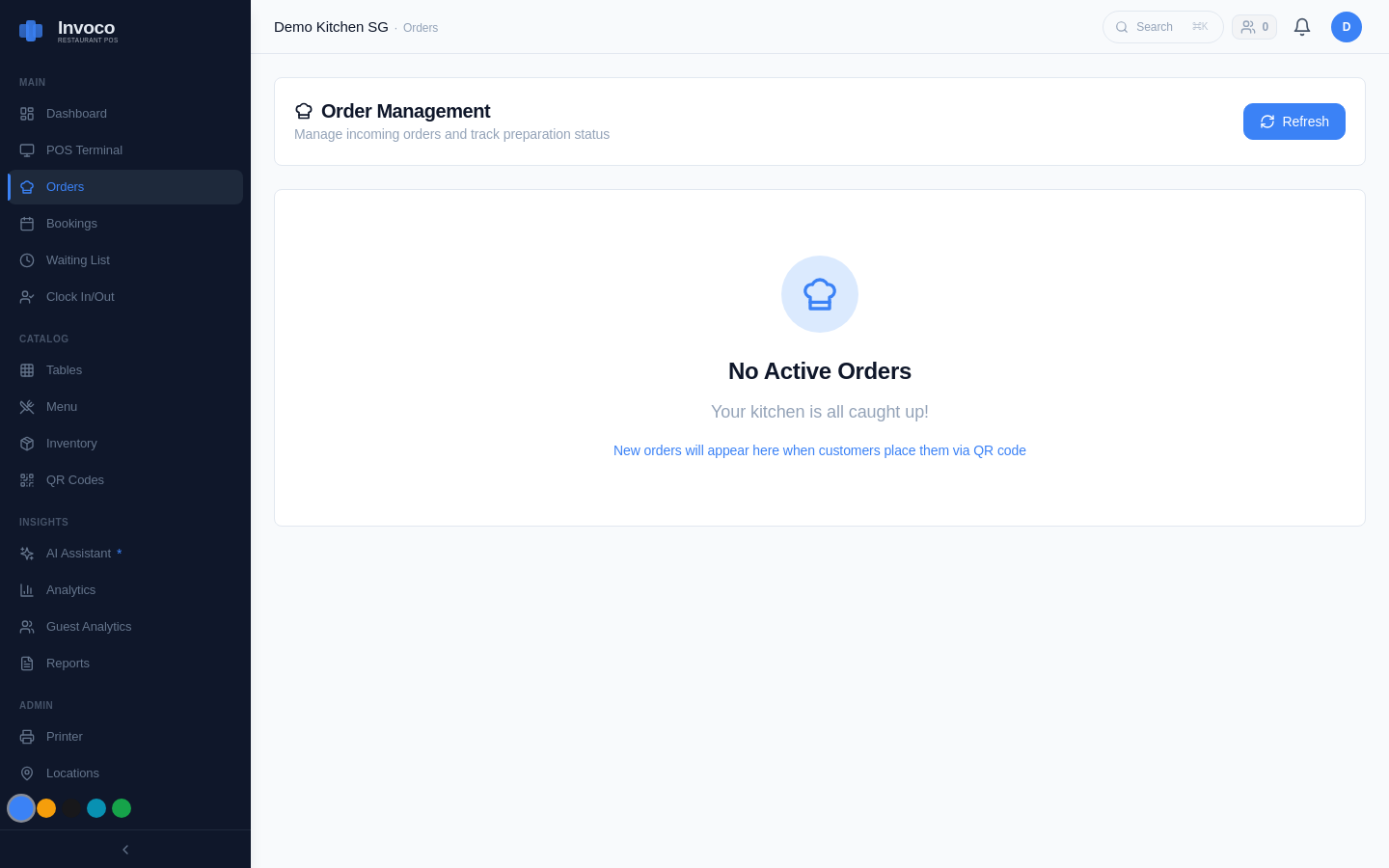 Invoco orders page with active and completed tickets
Fees: 1.5–2.5% per transaction (varies by provider and card type). Visa/Mastercard typically cost more than local debit cards.
Customer friction: Low. Tap or insert. Familiar to tourists and older customers.
Adoption: High among tourists, moderate among locals (most Singaporeans prefer PayNow or wallet apps).
Settlement: 1–3 business days, depending on your bank and the payment processor.
Setup: Buy a card reader (Square, SumUp, Stripe Terminal, or local providers like HitPay). Monthly rental or per-transaction fee. Integrate with your POS if you have one.
When to use: If you're in a high-tourist area (Boat Quay, Clarke Quay, Sentosa), card readers justify the 2% fee. If you're in a neighbourhood hawker centre, they're overkill.
Wallet Apps: The Incentive Play
Fees: None to you. Customers pay (or earn cashback). [DCS Cards App, ShopeePay, Grab, and Google Pay all support Hawker QR codes][5].
Customer friction: Medium-to-high. Customer must have the app installed and a balance or linked card.
Adoption: Moderate. Younger customers (under 35) use Grab and ShopeePay; older customers stick to PayNow or cash.
Reality: Wallet apps are customer acquisition tools for the wallet provider, not payment infrastructure for you. You don't control the cashback, so you can't predict customer behaviour.
The Operator's Playbook: What Actually Works
Based on [IMDA's support for hawker digital adoption][1], here's what successful stalls do:
Month 1: Set up PayNow. Print a QR code. Place it on your counter. Cost: S$0. Adoption: 40–50% of customers within 4 weeks.
Month 3: Add SGQR (via HitPay or your bank). Cost: S$0–S$20/month. Adoption: +15–20% of customers.
Month 6: If you're in a tourist area or high-traffic mall, add a card reader. Cost: S$50–150/month. Adoption: +10–15% of customers.
Ongoing: Keep cash. [Carrying SGD $20 to SGD $50 in small notes usually solves everything][2].
This phased approach lets you test adoption without overcommitting. Most hawker operators find that PayNow + SGQR covers 85–90% of their cashless volume.
How a POS System Ties It Together
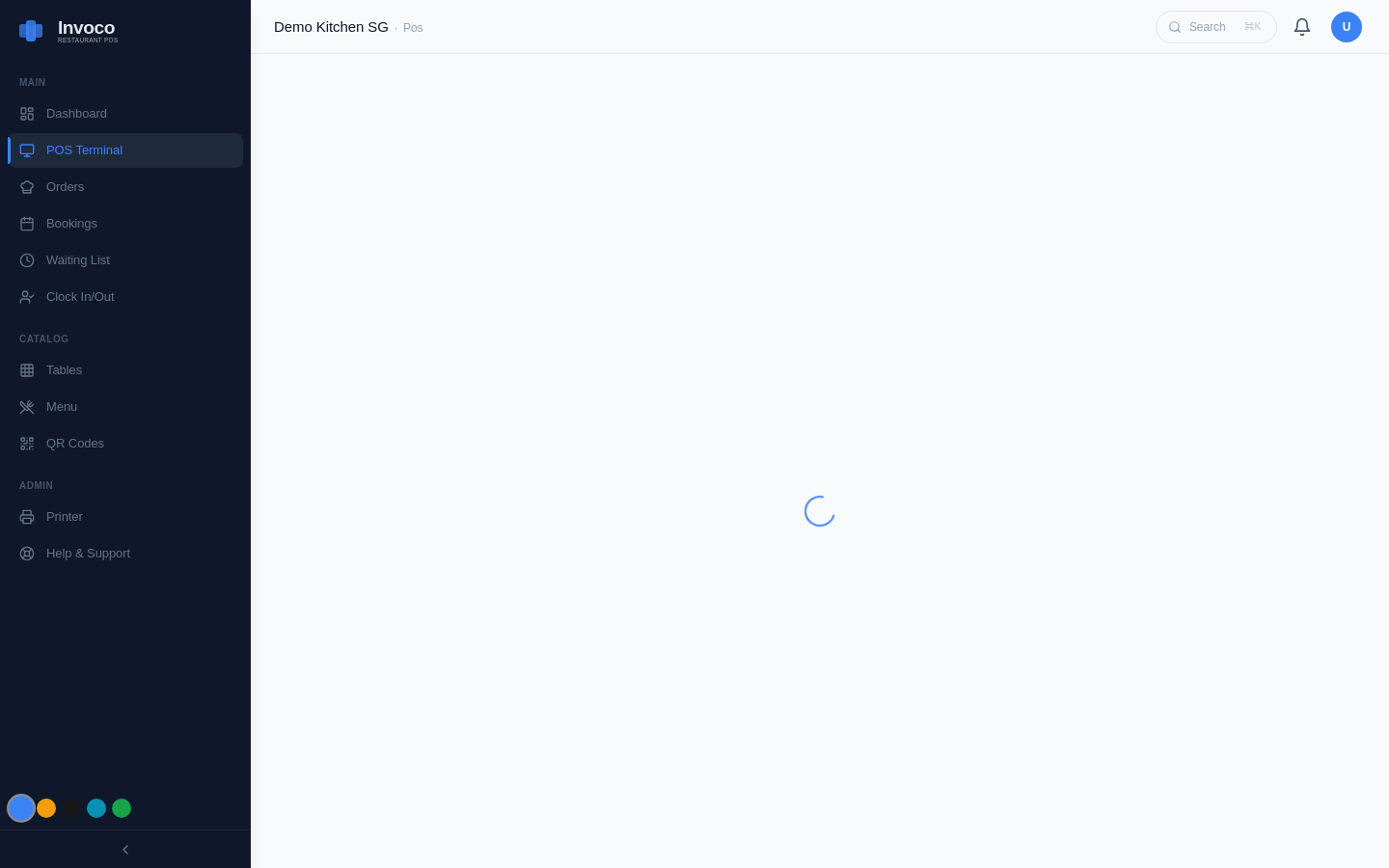 Invoco POS payment screen displaying PayNow QR, NETS, Card options for hawker stall checkout
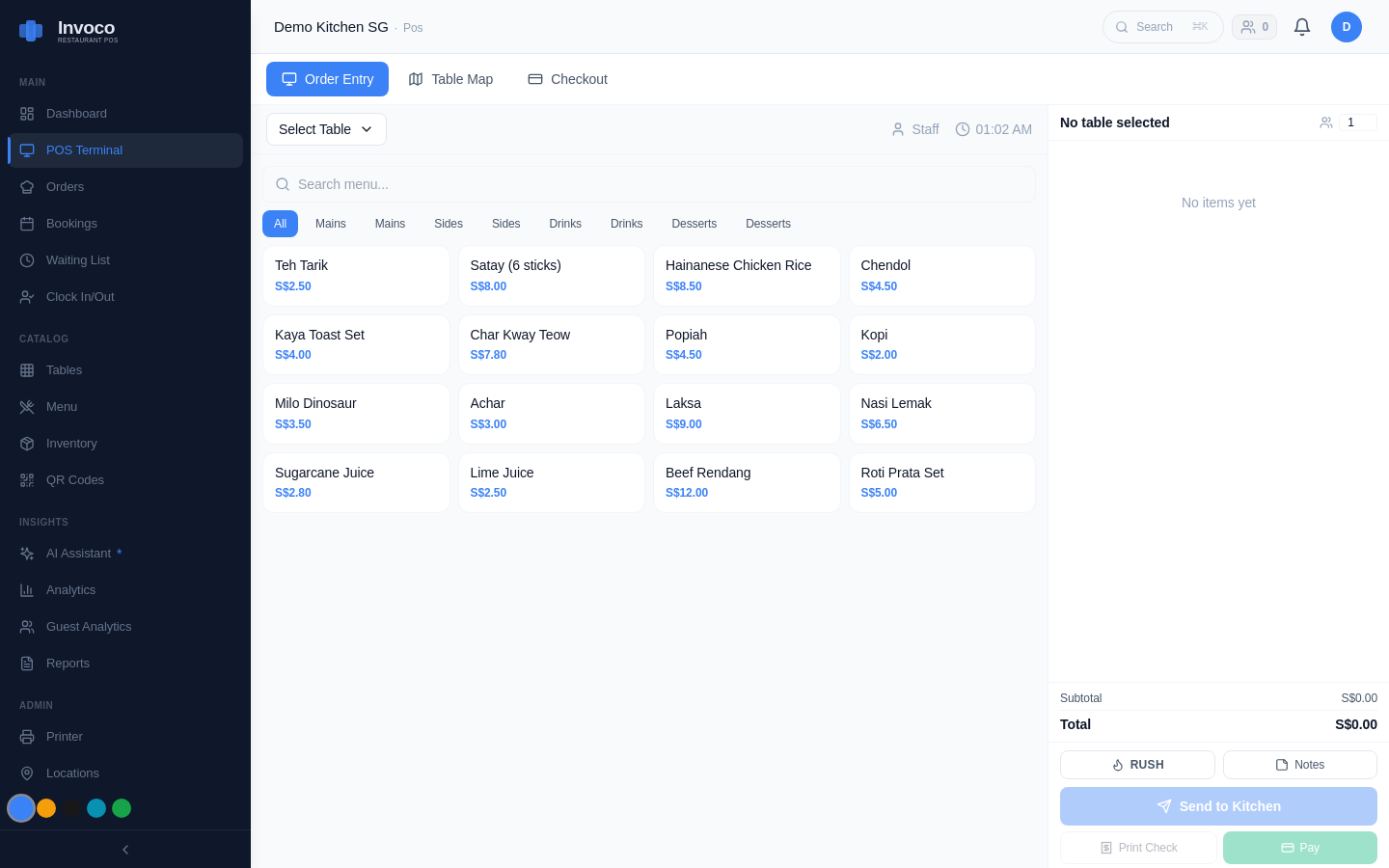 Invoco POS terminal checkout view with menu and payment options
If you're managing multiple payment methods, a POS system that integrates all of them is non-negotiable. Manually reconciling PayNow, SGQR, and card payments across three different bank apps wastes 30–45 minutes per day.
[Invoco's POS for hawker stalls][7] natively supports PayNow and credit card payments on-device, with receipts sent by email or SMS. When you integrate with Xero, approved payments sync automatically, so your accountant sees the full picture without manual data entry. The pain: juggling three payment apps and a spreadsheet. The outcome: one unified payment dashboard, daily settlement reports, and zero reconciliation errors.
Invoco tip: If you're using multiple payment methods, a POS that consolidates them saves you more than the POS costs in admin time alone.
Real Costs: What You'll Actually Pay
Assuming a stall with S$8,000 monthly revenue (roughly 200 transactions at S$40 average):
PayNow only: S$0/month. 100% of transactions settle instantly.
PayNow + SGQR: S$0–20/month (aggregator fee). 85% PayNow, 15% SGQR.
PayNow + SGQR + Card reader: S$50–150/month + 1.5–2.5% per card transaction. Assume 10% of revenue via card = S$800 × 2% = S$16/month in fees. Total: S$66–166/month.
Wallet apps alone: S$0/month, but adoption is low (5–10% of transactions) unless you're in a mall or CBD.
For most hawker operators, PayNow + SGQR costs S$0–20/month and covers 85–90% of cashless demand. Card readers are a luxury for high-traffic or tourist-facing stalls.
IMDA Support: Grants and Training
[IMDA's Hawkers Go Digital programme helps stallholders adopt digital payments][1] to reduce contact with customers and cash during transactions. You may qualify for subsidised equipment or training. Check [GoBusiness][8] for current grant eligibility and application deadlines.
FAQ
Q: Do I need all three payment methods? No. Start with PayNow. Add SGQR after 2–3 months if adoption is strong. Add card readers only if you're in a tourist area or high-traffic mall.
Q: What if a customer's PayNow fails? Keep cash as a backup. [Most hawker stalls still accept cash for this reason][2]. You're not eliminating cash; you're reducing it.
Q: Which payment method settles fastest? PayNow settles instantly, 24/7. SGQR and card payments settle in 1–3 business days depending on your bank and the wallet provider.
Next Steps
If you're running a [best POS for hawker stalls][7], ensure it integrates with PayNow and card payments out of the box. If you're managing payments manually, start with PayNow this week—it takes 10 minutes to set up and costs nothing.
For multi-outlet operators, [inventory software with recipe costing][9] paired with unified payment processing can cut your daily admin by 60%. But that's a separate conversation.
Sources
- The 2026 Guide to Payment in Singapore: Cards, EZ-Link & Wallets
- Wallet Apps For Hawkers and Dining (in 2026) - Sethisfy
- Best Ways to pay Hawker stores, Coffee shop & Food Court 2025
- Payment Options in Singapore - Little Island Furcon 2026
- Hawkers Go Digital - Singapore - IMDA
- common cashless option in Singapore - Tripadvisor